
A refrigerated container only stays cold while its unit has power. When there is no shore connection, such as on a truck, in a yard or on a remote site, that power comes from a genset: a diesel engine and generator built to run refrigeration equipment. Two designs are common, and the clip-on vs undermount genset decision affects cost, flexibility and compatibility. This guide explains the difference and how to match a genset to your equipment.
Key takeaways
- A genset powers the refrigeration unit when no grid power is available.
- Clip-on gensets attach to the container. Undermount gensets attach to the chassis beneath it.
- Match the electrical requirements first: voltage, frequency, phases and power output must suit the reefer unit.
- Check emissions rules and condition before you buy, especially for equipment used on roads.
What a genset does for a refrigerated container
A refrigerated container runs on three-phase electrical power. In a port, depot or cold store that power comes from a socket. In transit it does not, so a genset supplies it. The genset engine turns a generator that feeds electricity to the refrigeration unit through a power cable, keeping the cargo at temperature for as long as the fuel lasts.
Clip-on vs undermount genset: the core difference
| Clip-on genset | Undermount genset | |
|---|---|---|
| Where it mounts | Attached to the front of the container | Mounted to the chassis, beneath the front of the container |
| Movement | Can be removed and moved between containers | Stays with the chassis or trailer |
| Suits | Setups where the genset needs to move between containers | Setups where the genset stays with a chassis |
| Things to check | Container compatibility, mounting fixings, handling time | Chassis compatibility, mounting brackets, fuel tank capacity |
Clip-on gensets
A clip-on genset is mounted to the container itself and can be removed when the container reaches its destination or changes transport. That flexibility suits operators who move containers between trucks, rail and storage. The trade-off is the handling involved in attaching and removing the unit, and making sure the container and the genset are compatible. You can browse options in our clip-on gensets for refrigerated units category.
Undermount gensets
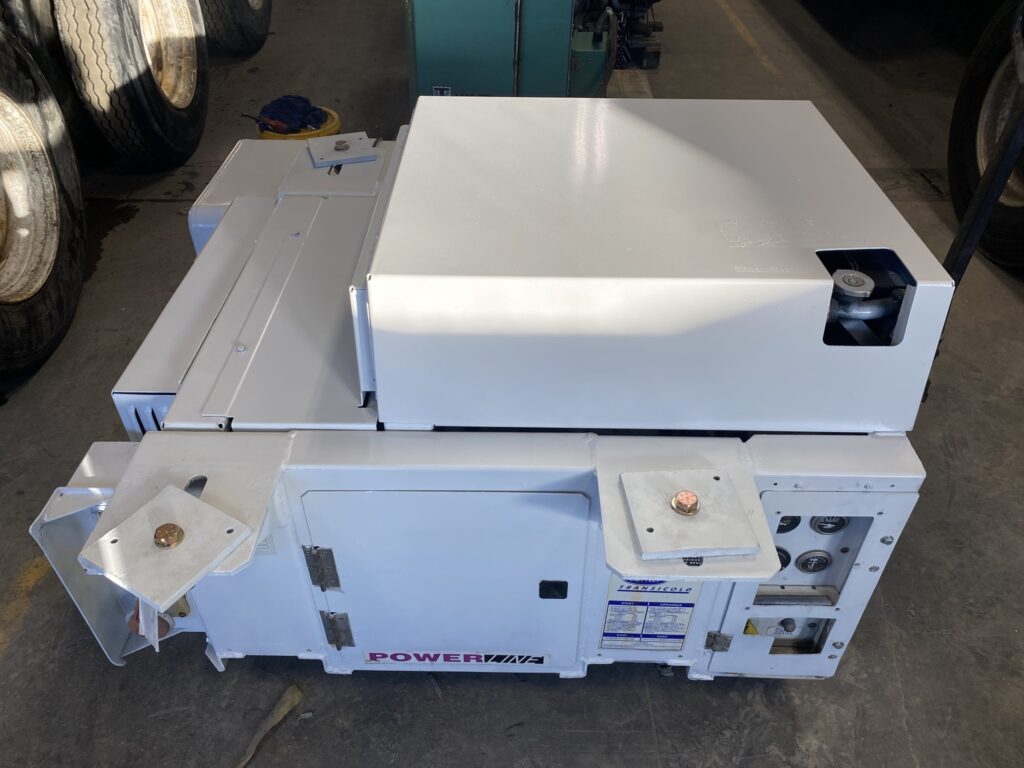
An undermount genset (sometimes called an underslung genset) is mounted to the chassis beneath the front of the container, so it travels with the chassis rather than the container. That keeps the container free of added equipment and lets one genset serve whichever reefer is loaded on that chassis. Fuel tank size and run time vary by model, so check the specification for the unit you are considering. See our undermount gensets and the Carrier undermount genset category for examples.
How to match a genset to your equipment
Electrical requirements
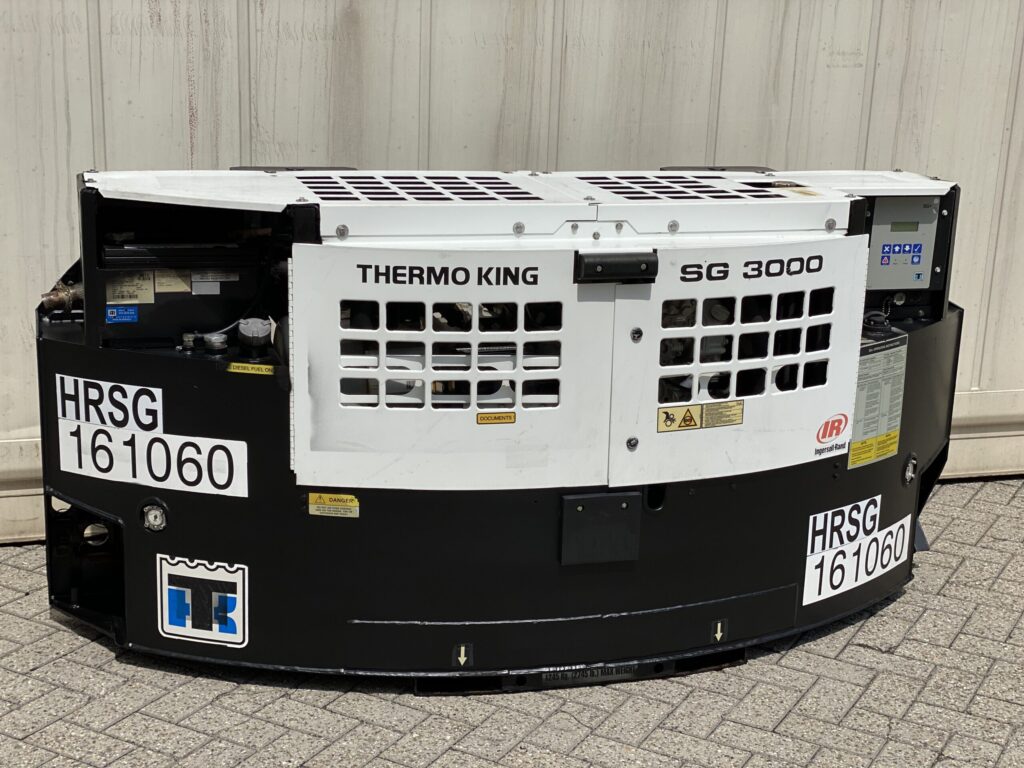
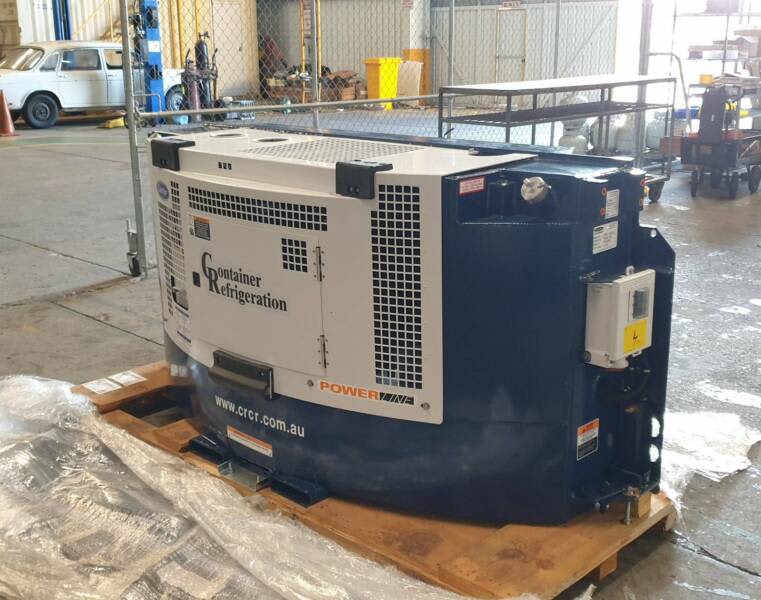
Start with the refrigeration unit, not the genset. Find the reefer unit model and its electrical requirements, then confirm the genset’s voltage, frequency, phases and rated output. Reefers commonly run on three-phase power, and voltage and frequency differ by region, for example 460 V at 60 Hz in North America and 380 V at 50 Hz in many other markets. Our listings show typical values: the Thermo King SG 3000 undermount is described as 440–480 V, 60 Hz, three-phase, and the Carrier clip-on as 15 kW, 460 V, three-phase, 60 Hz. The genset must also handle the extra power the unit draws when it is cooling down from a warm start.
Fuel and run time
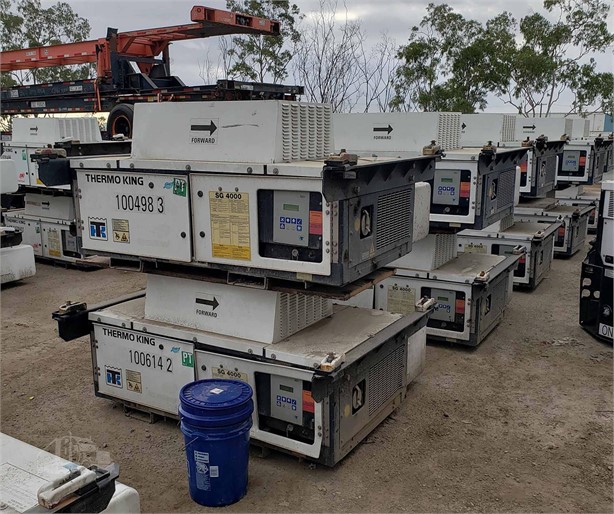
A larger fuel tank gives longer running time between fills, which matters on long journeys. Ask for the fuel capacity and typical consumption of the model, and compare it with your route or duty cycle. As examples from our listings, the Thermo King SG-5000 clip-on lists a 473-litre (125 US gallon) tank and the Carrier clip-on lists about 492 litres (130 US gallons); figures vary by model and configuration.
Emissions standards
Engine emissions classes such as US EPA Tier 4 and EU Stage V appear in genset listings because they can determine where a genset may be used. In California, the California Air Resources Board regulates transport refrigeration units and their generator sets, so check current requirements for your operating area before you buy.
What to check on a used genset
- Engine hours and service records: they show how hard the unit has worked and how well it was maintained.
- Leaks and condition: look for fuel or oil leaks, damaged panels and a clean, intact electrical cabinet.
- Test run under load: ask for a documented test showing stable output, not just that the engine starts.
- Mounting hardware and cables: confirm brackets, clips, power cable and plug are present and match your equipment.
- Alarm history and controls: check the controller for stored faults.
For a wider look at what to inspect on the refrigeration side, see our guide to buying a refrigerated container.
Gensets to look at
These listings illustrate the two designs. Confirm the model, condition and compatibility with our team before ordering:
- Carrier PowerLINE undermount genset for chassis-mounted power.
- Thermo King SG 3000 undermount genset as a Thermo King option.
- Carrier clip-on generator set for container-mounted power.
- Thermo King SG-5000 clip-on genset, listed as Tier 4 compliant.
Genset FAQs
What is the difference between a clip-on and an undermount genset?
A clip-on genset attaches to the front of the container and can be moved between containers. An undermount genset mounts on the chassis beneath the container and stays with the chassis.
Which is better for refrigerated containers?
Neither is better in every case. Clip-on suits flexible operations where containers change vehicles. Undermount suits regular road transport on a dedicated chassis. Your equipment and duty cycle decide.
How do I know a genset will run my reefer unit?
Compare the reefer unit’s voltage, frequency, phases and maximum power draw with the genset’s rating, and ask the seller to confirm compatibility for your specific models.
Do I need a genset if I have grid power?
No. If your site has a suitable three-phase supply, a reefer can usually plug in directly. A genset is for transport or locations without grid power.
Does the emissions tier matter?
It can, depending on where the genset will operate. Rules differ by region, so check local requirements before buying, particularly for road use.
Where to go next
See our Buyer’s Guide for the basics of buying online, browse the full inventory, or contact the team with your equipment details. You can also return to the Blog for more guides, or read our guide to choosing a shipping container.