
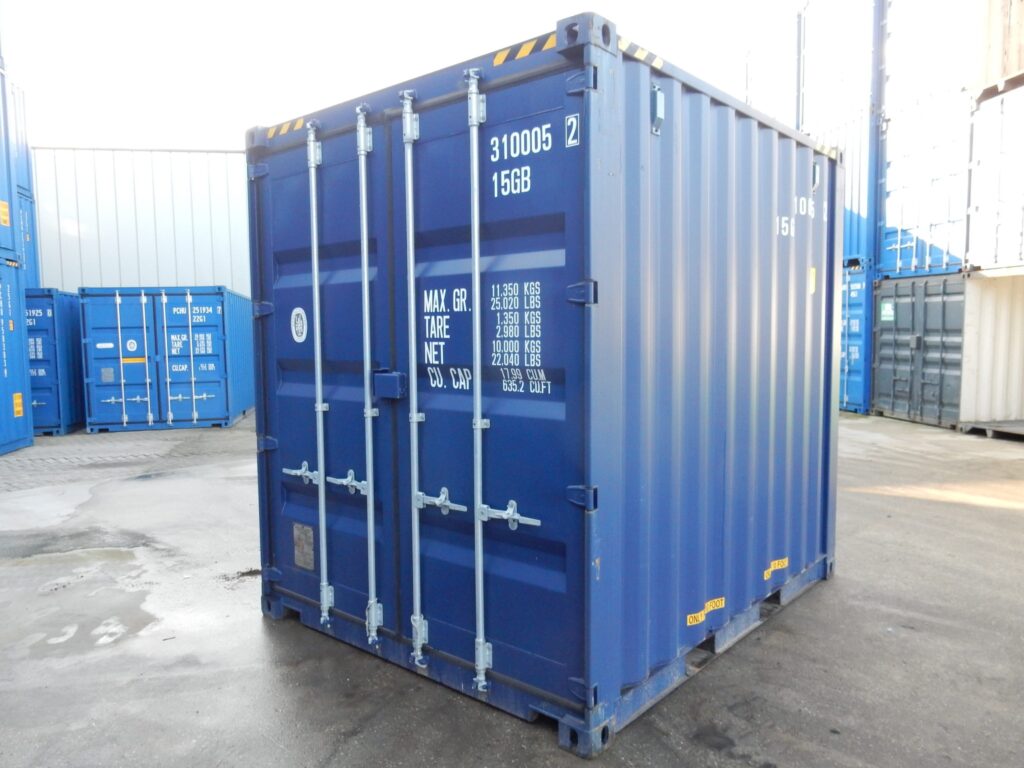
Buying a shipping container looks simple until you compare listings. One container is described as “new,” another as “cargo-worthy,” a third as “wind and watertight,” and the sizes, door layouts and prices all differ. This guide explains how to choose a shipping container by working from what you need it to do, so you can narrow a long list down to the few units worth asking about.
Key takeaways
- Start with the job. Storage, shipping, a workshop or a modification project each favour a different size and condition.
- Size is about usable space and access. Measure your site and delivery route before you pick 20ft or 40ft.
- Condition terms are not standardised. Ask any seller what a term such as “cargo-worthy” means for the specific unit, and ask for photos of that container.
- Check the doors, floor, roof and data plate before you commit.
Start with what the container will do
The most useful first question is not “what size?” but “what will it be used for?” A container that will sit on your property holding tools and inventory has different requirements from one that will be loaded onto a vessel, and both differ from one you plan to cut openings into and convert.
- On-site storage: weather resistance and secure doors matter most. Cosmetic wear is usually acceptable.
- Shipping cargo: the container should be structurally sound for transport and carry a valid safety approval plate (see the condition section below).
- Conversion or workshop: straight walls, a sound roof and a solid floor give you the best starting point. Any cutting changes the structure and should be reinforced.
- Specialised loads: tall, wide or heavy equipment may need an open top, open side or flat rack instead of a standard box.
How to choose a shipping container size
Shipping container exterior sizes follow ISO standards, so the external dimensions below are consistent between manufacturers. Interior dimensions and volumes are approximate and vary slightly by manufacturer, so confirm them on the listing you are considering.
| Size | Typical external size | Approx. interior volume | Often used for |
|---|---|---|---|
| 10ft | 10 ft × 8 ft × 8 ft 6 in | about 15–16 m³ | Compact storage, small sites, site tool stores |
| 20ft | 20 ft × 8 ft × 8 ft 6 in | about 33 m³ | General storage, most shipping and conversion work |
| 40ft | 40 ft × 8 ft × 8 ft 6 in | about 67 m³ | Larger volumes, long items, bigger workshops |
| 40ft high cube | 40 ft × 8 ft × 9 ft 6 in | about 76 m³ | Tall stacking, extra headroom, conversions |
A 20ft container is the practical default for many buyers because it is easier to deliver and place than a 40ft. If you are choosing between the two, the deciding factor is often access: a 40ft container needs a longer, straighter approach and more room to unload. If you need extra headroom, a high cube container adds about a foot of internal height over a standard unit.
Standard, high cube and specialty types
Most buyers start with a standard dry container, but several variations solve specific problems:
- Standard dry container: the general-purpose box with doors at one end.
- High cube: the same footprint with about a foot more height.
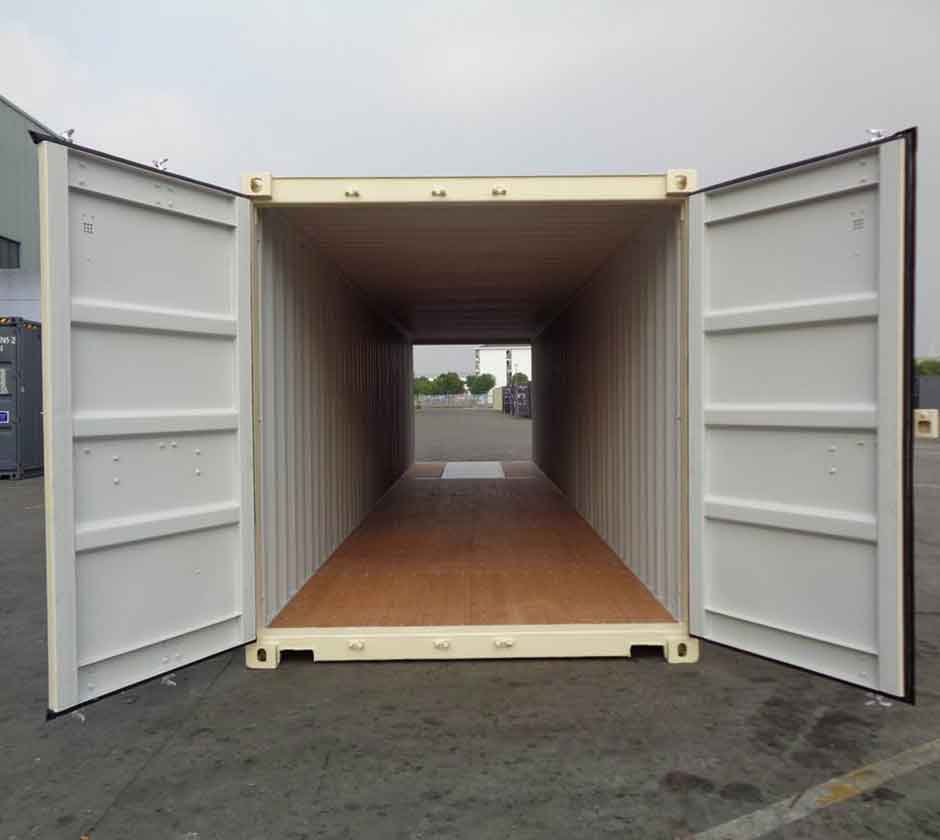
- Double door (tunnel) containers: doors at both ends for loading from either side.
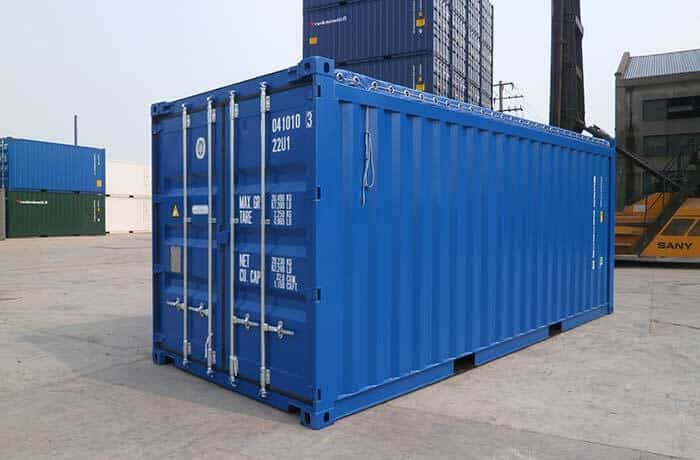
- Open top: a removable roof so tall items can be lowered in by crane.
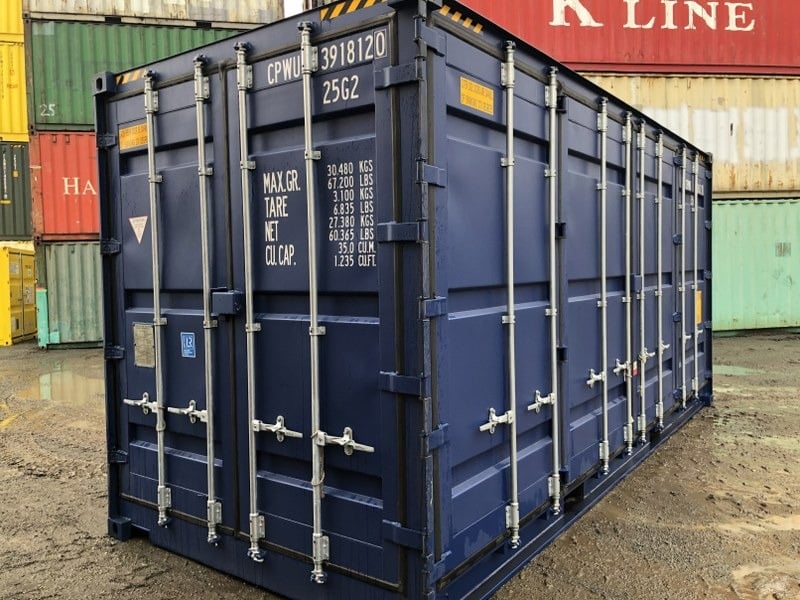
- Open side: wide side access for long or bulky goods.
- Flat rack: no side walls, for oversized or heavy loads.
- Refrigerated (reefer): insulated and temperature-controlled. This is a separate buying decision with its own checklist.
You can browse the full range in our standard shipping containers category, or look at specific formats such as flat rack containers when a standard box will not fit the load.
Understand the condition terms
Condition wording is where most confusion happens, because there is no single standard that every seller follows. These are the terms you are most likely to see, with the meaning they usually carry in the trade. Treat them as a starting point for questions, not a guarantee:
- New (one-trip): built and shipped loaded once from the factory, then sold, so it should show minimal wear.
- Cargo-worthy: structurally sound and suitable to be loaded with cargo for shipping.
- Wind and watertight: sound enough for storage, with no leaks, but not necessarily suitable to ship cargo.
- As-is: sold without a condition guarantee, so inspect it carefully.
Because these labels vary, ask the seller to describe the exact unit and to send current photos. If the container will be used for international transport, look for a valid CSC safety approval plate. The plate is required under the International Convention for Safe Containers (CSC), a convention of the International Maritime Organization.
What to check before you buy
Whether you inspect in person or through photos and video, go through the same checklist:
Structure and doors
Look at the corner castings and the top and bottom rails for cracks or heavy corrosion. The doors should close fully, the locking bars should turn, and the rubber gaskets should be intact and continuous.
Floor and roof
Container floors are usually marine plywood. Look for soft spots, water staining or splits. On the roof, look for deep dents and pooling or rust, which are common sources of leaks.
Light test
Step inside, close the doors and look for daylight. Small pinholes of light can indicate places water will get in.
Numbers and paperwork
Confirm the container number and the data plate details match the listing, and ask what documentation comes with the unit.
Plan delivery and placement
A container is heavy and long, so delivery deserves as much thought as the purchase. Before you order, check:
- Ground: a level, firm base such as compacted gravel, concrete pads or blocks keeps the doors working and the floor dry.
- Access: the delivery truck needs a clear approach, turning room and no low overhead obstacles.
- Unloading method: ask what equipment the carrier uses and what space it needs.
- Local rules: some areas require permits or have zoning limits on storage containers, so check with your local authority.
Delivery availability and cost depend on your location and site access, so contact us with your address and we can discuss the options.
Containers to look at
If you want to see how these choices appear in real listings, these are useful examples across different formats:
- Buy 40ft Double Door Shipping Containers for loading from both ends.
- 20ft open top shipping containers for tall items lowered in by crane.
- 20ft standard container with three door handles described in the listing for storage and transportation use.
Each listing shows its own specifications, so confirm size, condition and delivery details with our team before ordering.
Shipping container FAQs
What size shipping container should I buy?
Choose the smallest container that fits your load with room to work, then check that your site and delivery route can handle it. For many buyers that is a 20ft unit. A 40ft or 40ft high cube makes sense when you need long items, large volumes or extra headroom.
Is a high cube container worth it?
If you need extra height for stacking, tall equipment or a more comfortable interior after conversion, yes. If you only need floor space and low-height storage, a standard container is usually enough.
What is the difference between a new and a used container?
A new or one-trip container has had little or no use and usually has less wear. A used container is normally cheaper but may show dents, rust and repainting. Either way, judge the specific unit rather than the label.
Do I need a permit to place a shipping container?
That depends on where you live and how the container will be used. Some areas regulate storage containers or treat them as structures, so check with your local planning or building authority before delivery.
Can I modify a shipping container?
Yes, containers are commonly cut for doors, windows and vents. Removing steel from the walls weakens them, so cuts should be framed and reinforced, and any habitable conversion has to meet local building requirements.
Where to go next
For a broader overview of buying a container online, read our Buyer’s Guide. To see what is available, browse our full inventory or contact the team with your requirements. Working with cold-chain equipment instead? Read our refrigerated container buying guide and our guide to clip-on and undermount gensets, or return to the Blog for more guides.