
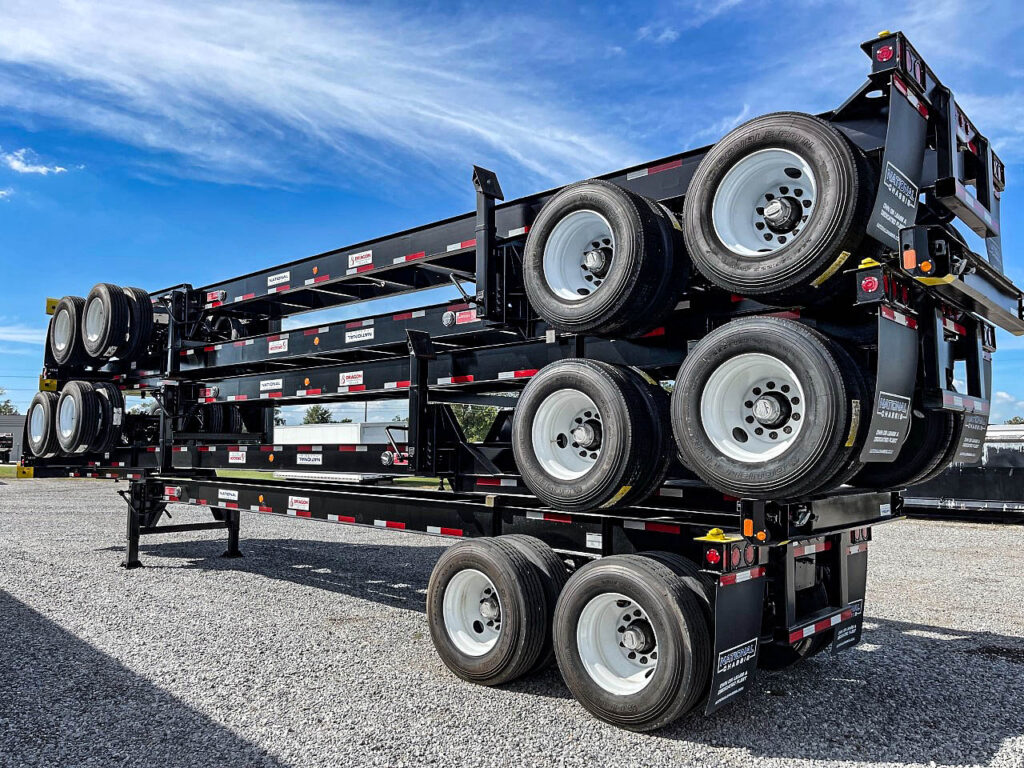
A container chassis is the frame that carries a shipping container on the road. It looks simple, but the wrong chassis for your container, weight or route is an expensive mistake. This guide to container chassis types explains how 20ft, 40ft, gooseneck and extendable chassis differ, and what to check before you buy.
Key takeaways
- Match the chassis to the container: the length, the weight and the way the container sits on the frame all matter.
- Axle count depends on the load. Heavier containers may need a tri-axle chassis.
- An extendable chassis trades simplicity for flexibility, because one frame can carry more than one container length.
- Ask for inspection documentation. Federal rules require periodic inspection of commercial motor vehicles, and that includes every vehicle in a combination.
What a container chassis does
A chassis is a skeletal trailer frame with axles, wheels, landing legs and locking hardware. The container rests on the frame and is secured to it by twist locks that engage the container’s corner castings, so it can be moved between truck, port, rail yard and warehouse without unloading. The chassis carries the weight, so its frame, axles, tires and brakes need to suit the loads you plan to haul. This is intermodal equipment: the Intermodal Association of North America defines intermodal as the movement of cargo in shipping containers or trailers by more than one mode of transportation.
Container chassis types at a glance
| Type | Designed for | Notes from our listings |
|---|---|---|
| 20ft chassis | A 20ft container | One listing gives length of 24 ft and above, width 96 in, king pin 18 in from the front, coupler height 48 in and tare weight of about 3,200 kg |
| 40ft chassis | A 40ft container | A listing says standard two-axle chassis can carry containers of 20ft to 40ft, and that a tri-axle is needed for heavier loads |
| 40ft gooseneck | A 40ft container | Frame main parts described as high-strength low-alloy steel (ASTM A572 Grade 50); components listed include spring suspension, ABS and two-speed landing legs |
| 40/20 extendable | A 20ft or 40ft container on one frame | A 2024 model listing gives a tare weight of about 7,500 lb, tandem axles with 72 in spacing and 22,500 lb axle ratings |
These figures come from our listings for specific units. Specifications vary by manufacturer and model, so confirm them for the exact chassis you are considering.
20ft and 40ft chassis
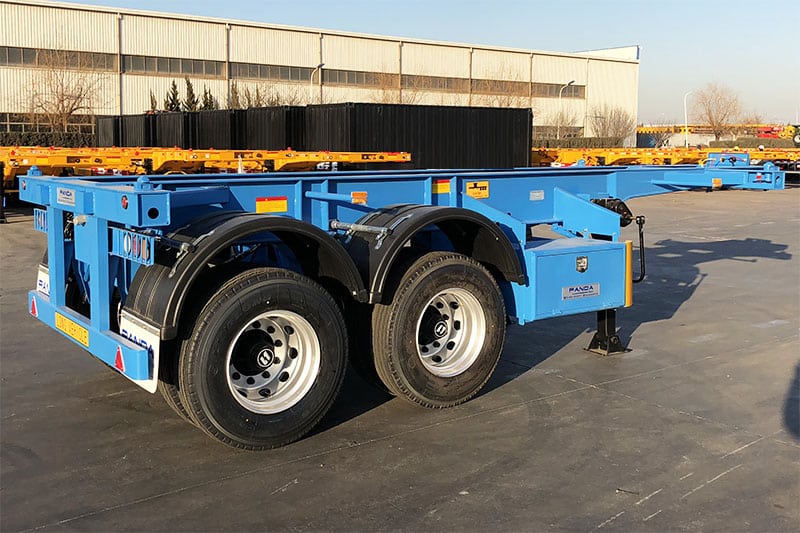
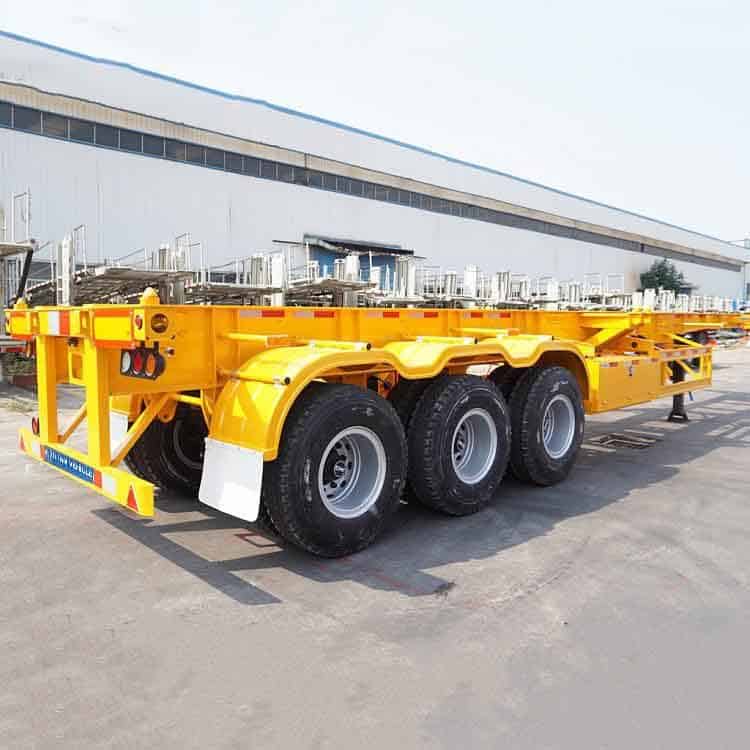
A 20ft chassis is shorter and lighter, and suits 20ft containers. A 40ft chassis is longer and is commonly used for 40ft containers. A listing for a 40ft chassis says a standard two-axle chassis can carry containers from 20ft to 40ft, and that a tri-axle chassis is needed for 20ft containers over 36,000 lb or 40ft containers over 44,000 lb. Legal weight limits depend on where you operate, so treat that as a rule of thumb from one listing and check the local rules before hauling. You can compare the range in our container chassis for sale category.
Gooseneck chassis
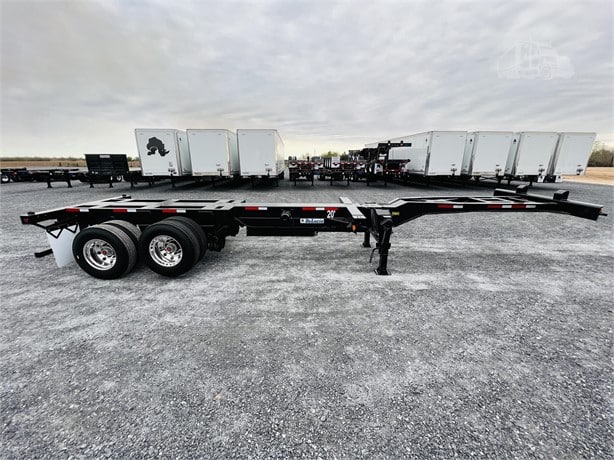
A gooseneck chassis has a raised front section that fits into the recess in the underside of a 40ft container, which lets the container sit lower on the frame. Our 40ft gooseneck chassis listing describes a frame built from high-strength low-alloy steel, spring suspension, anti-lock brakes and two-speed landing legs, and it notes that used units come with current FHWA inspection certificates. For comparison, manufacturer specifications such as Cheetah Chassis’s 40 ft gooseneck list an approximate tare weight of 6,400 lb and structural steel to ASTM A572 Grade 50 or better. Undermount gensets for refrigerated containers are also mounted to the chassis, so read our guide to clip-on and undermount gensets if you plan to haul reefers.
Extendable chassis
An extendable chassis can be adjusted to carry a shorter or longer container, so one unit covers more jobs. The trade-off is more moving parts to inspect and maintain. The 2024 40/20 extendable chassis listing gives its tare weight as about 7,500 lb, so compare tare weights when payload matters. For reference, Cheetah Chassis lists its 40 to 45 ft extendable gooseneck at about 6,800 lb.
How to choose a container chassis
- Container length and weight: pick the chassis that suits both, with a margin for the heaviest load you expect.
- Axles and suspension: heavier loads may need more axles, and the rating should be shown on the unit.
- Tires, brakes and lights: check tire condition, brake function and ABS, and that the lighting works.
- Landing legs and locking hardware: both should move freely and the twist locks should engage properly.
- Frame condition: look for cracks, repairs, corrosion and bent members.
- Route and rules: check the weight and length rules where you will operate.
Inspection and paperwork
Under 49 CFR 396.17, every commercial motor vehicle, including each vehicle in a combination, must be inspected, and a vehicle may not be used unless it has passed an inspection within the preceding 12 months with documentation on the vehicle. Intermodal equipment providers must inspect equipment they interchange. Ask any seller for current inspection documentation and ownership paperwork, and ask what was covered.
Chassis to look at
These listings show the main types. Confirm the specification, condition and inspection status with our team before ordering:
- 20ft container chassis for 20ft containers.
- 40ft container chassis as a standard 40ft option.
- 40ft gooseneck chassis for 40ft containers.
- 40/20 extendable chassis for flexibility.
If you are still deciding on the container itself, see our standard shipping containers and our guide to how to choose a shipping container.
Container chassis FAQs
What is the difference between a chassis and a trailer?
A container chassis is a skeletal frame built to carry a container secured by twist locks. A conventional trailer has a deck. They are both towed, but a chassis needs the container to complete the load.
Do I need a tri-axle chassis?
It depends on the weight of the container and its load and on local weight limits. One of our listings suggests a tri-axle for heavier loads, but check the rules where you operate.
Can one chassis carry both 20ft and 40ft containers?
An extendable chassis is designed to. Some fixed chassis can carry more than one length, but confirm this for the exact unit.
What paperwork should I ask for?
Ask for ownership paperwork and current inspection documentation. Check that the inspection covers the components required by the federal rule.
This post is general information, not legal, safety or compliance advice. Requirements depend on your location and equipment, so confirm them with the relevant authority or a qualified professional.
Where to go next
Read our Buyer’s Guide for the basics of buying online, browse the full inventory, or contact the team with your requirements. More guides are in the Blog.