
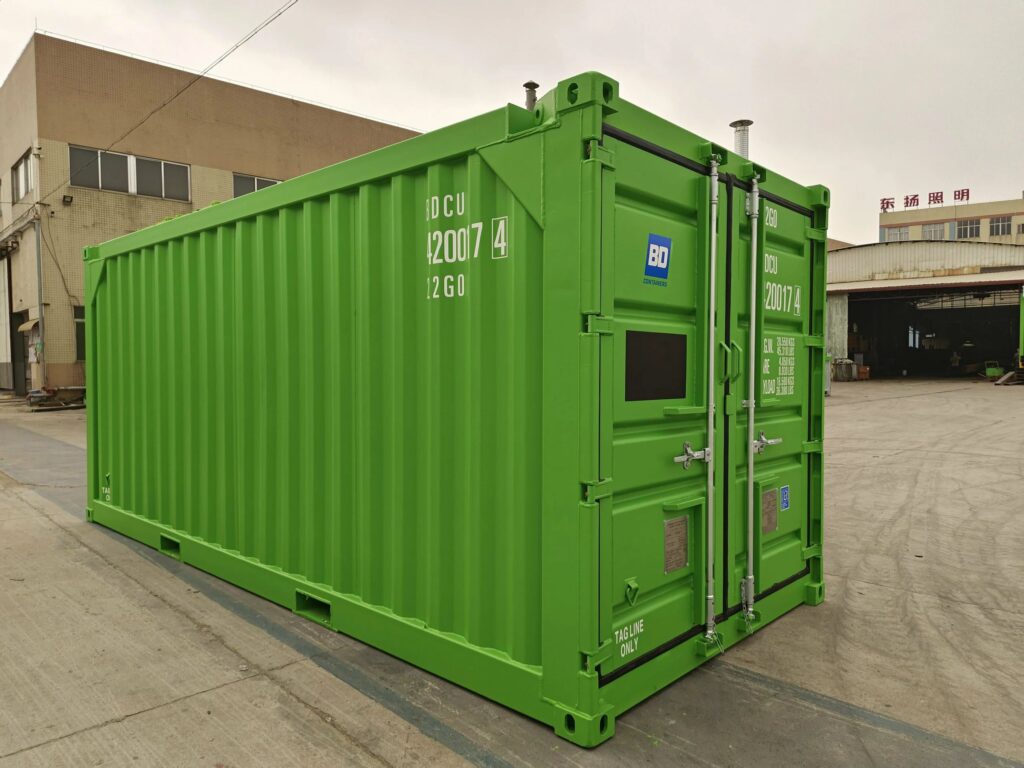
DNV offshore containers look like shipping containers, but they are built and certified for a different job: being lifted repeatedly by crane onto and off offshore installations and vessels. That changes how they are designed, tested, marked and documented. This guide explains what DNV offshore containers are, the main types, and which certificates and documents to ask for before you buy.
Key takeaways
- An offshore container is certified for lifting and handling offshore, not just for stacking on a ship.
- The standard is now designated DNV-ST-E271 (also known as 2.7-1), so check which edition a certificate refers to.
- Slings may not be included. Our listings say so, so state clearly if you need a certified lifting set.
- Ask for the paperwork: the container certificate, sling test certificates where applicable, and inspection status.
What is an offshore container?
An offshore container is a portable unit designed to carry equipment and supplies to and from offshore locations, where it is lifted between vessels and platforms. Its structure, lifting points and marking are certified to a specific standard, and the standard also covers periodic inspection. According to DNV, DNV-ST-E271 (2.7-1 Offshore containers) provides technical requirements and guidance for the approval and certification of offshore containers and lifting sets, for both new-build and in-service containers, including manufacturing, testing, marking and periodic inspection. DNV also notes that IMO’s MSC/Circ.860 guidelines for approving offshore containers refer to DNV 2.7-1 among the standards to consult.
Our listings also refer to EN 12079, ISO and CSC certification alongside DNV 2.7-1. Ask the seller which certificates apply to the exact unit and to see them.
Offshore container vs standard shipping container
| Standard shipping container | DNV offshore container | |
|---|---|---|
| Designed for | Transport and storage | Repeated offshore lifting and handling, as well as storage |
| Lifting | Handled by the corner castings with lifting equipment | Typically lifted with a certified lifting set from purpose-built lifting points |
| Certification | CSC plate for transport | Container certificate under the offshore standard, plus lifting set certificates |
| Inspection | Periodic inspection under container safety rules | Periodic inspection defined by the offshore standard |
If you are still choosing between ordinary container types, start with our guide to how to choose a shipping container. An ordinary container is not certified for offshore lifting, so do not treat one as a substitute.
Main types of DNV offshore containers
Our listings describe several formats, in both flat and corrugated panel versions:
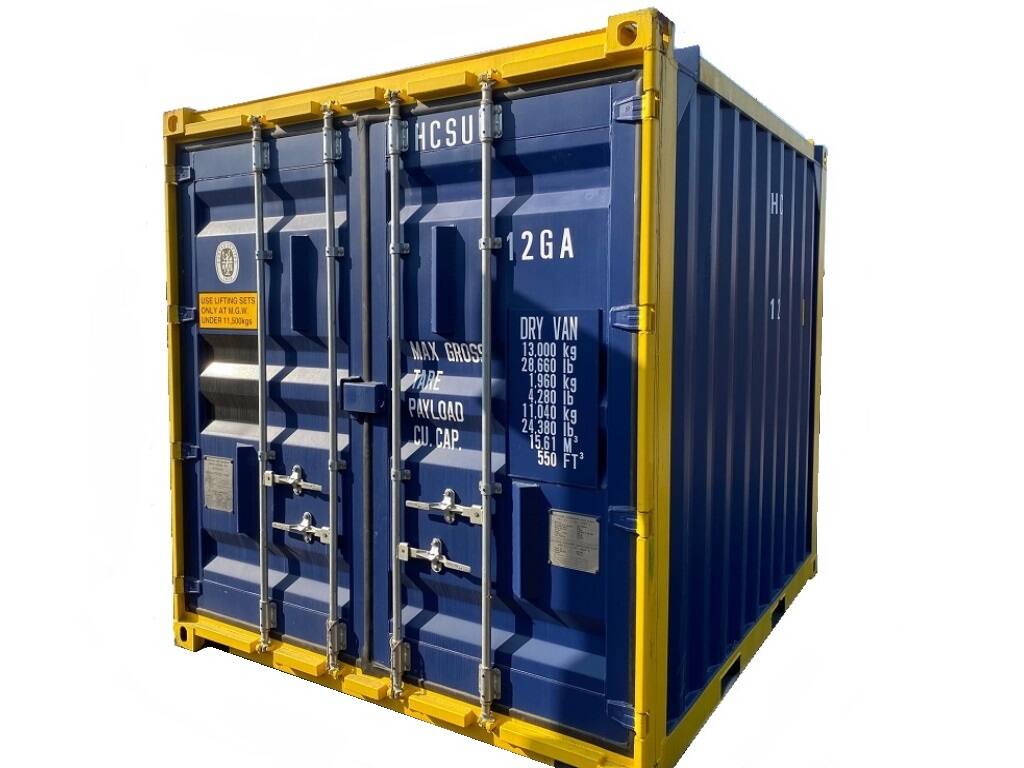
- Closed containers in 10ft and 20ft sizes, the general-purpose option.
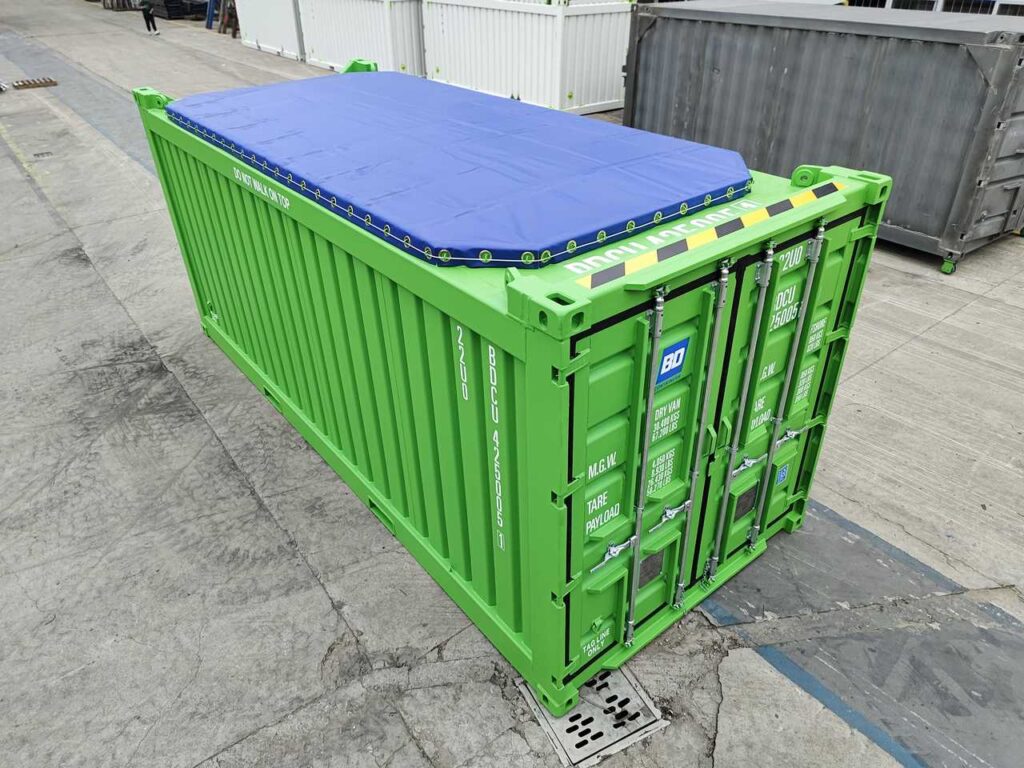
- Open top containers for tall or awkward items that are loaded from above.
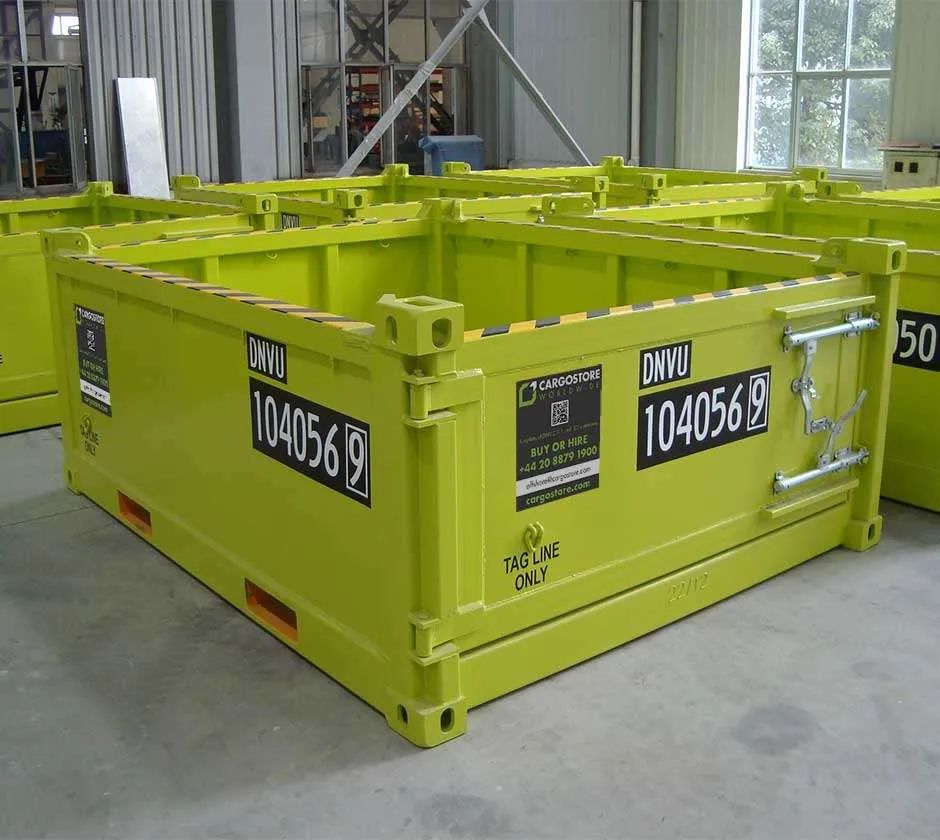
- Half-height containers for dense, heavy items. The 10ft listing describes a swing door, internal lashing points and a tarpaulin.
- 5ft mini containers for small loads in confined spaces; the listing says they can be stacked with the sling mounted.
- Refrigerated offshore containers for temperature-controlled supplies. Our guide to refrigerated containers explains how reefers work.
Certification and documents to ask for
- The container certificate and the standard and edition it refers to.
- Lifting set (sling) certificates, if slings are supplied. Our listings say slings are not always included, so specify this before ordering.
- Production and sling test certificates where applicable. Our 10ft listing says copies are available.
- Marking and plates that are legible and match the paperwork.
- Inspection status, especially for a used or in-service unit, since the standard covers periodic inspection.
If a certificate refers to the older 2.7-1 designation, ask whether it has been reissued or how it relates to the current DNV-ST-E271 edition.
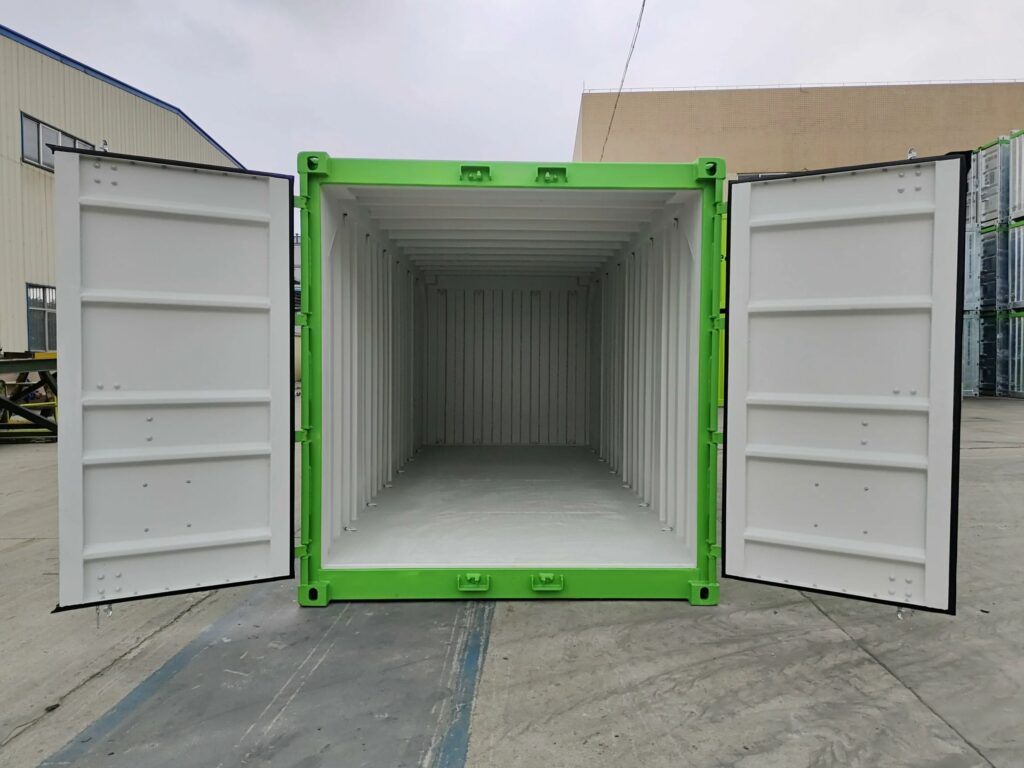
New, used and in-service containers
DNV says its standard covers both new-build and in-service containers, so a used offshore container is not simply an ordinary used box. Its certification depends on the periodic inspection history as well as how it was built. When you compare a new unit with a used one, ask when the last inspection took place, what it covered, and what the container was used for since. Damage from handling or corrosion matters more on a unit that will be lifted repeatedly.
How to choose
- Start with the load: its size, weight and whether it needs to be loaded from above.
- Think about handling: how and where it will be lifted, and whether you need a certified lifting set.
- Check space and stacking: deck space is limited offshore, which is why smaller formats exist.
- Decide on new or used, and ask for inspection records if used.
Offshore containers to look at
These listings show the main formats. Confirm certification, condition and slings with our team before ordering:
- 20ft DNV offshore container, a closed general-purpose unit.
- 10ft DNV offshore container for smaller loads.
- 20ft DNV offshore open top container for tall items.
- 10ft DNV half-height container for dense items.
See the full DNV offshore container category, or browse 20ft containers and 10ft containers by size.
DNV offshore container FAQs
What does DNV 2.7-1 mean?
It is the long-standing name for DNV’s offshore container standard, now designated DNV-ST-E271. It covers approval, certification, manufacturing, testing, marking and periodic inspection of offshore containers and lifting sets.
Is an offshore container the same as a shipping container?
No. It may look similar, but it is certified for offshore lifting and handling and carries certification and marking that an ordinary container does not.
Do offshore containers come with slings?
Not always. Our listings note that certified slings are typically offered but not automatically included, so state whether you need them when you enquire.
How do I know a container is still in certification?
Ask for the certificate, the marking on the container and its inspection records. The standard covers periodic inspection, so a used container should have current inspection status.
This post is general information, not legal, safety or compliance advice. Requirements depend on your location and equipment, so confirm them with the relevant authority or a qualified professional.
Where to go next
Read our Buyer’s Guide for the basics of buying online, browse the full inventory, or contact the team with your requirements. More guides are in the Blog.