
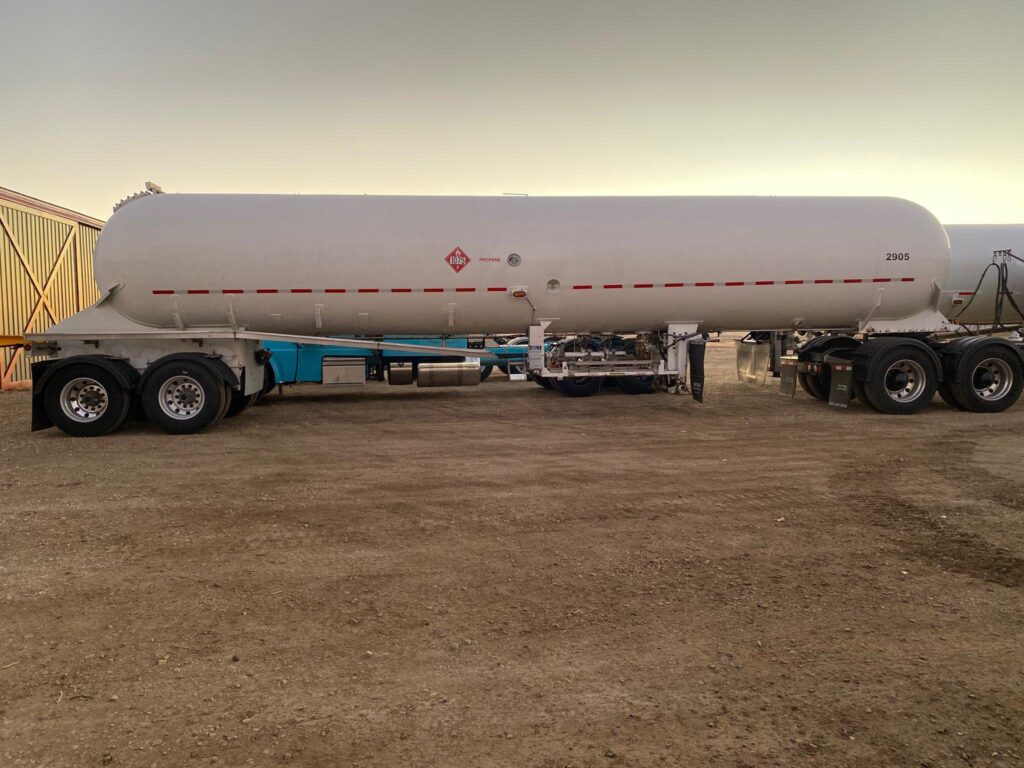
An LPG tank trailer is a road-going pressure vessel, and buying one is very different from buying a stationary storage tank. It is a regulated piece of transport equipment with its own specification, plates, test schedule and markings. This guide explains what an MC-331 LPG tank trailer is, how to read its ratings and markings, and what to check before you buy.
Key takeaways
- MC-331 is a U.S. DOT cargo tank specification for pressure tanks that carry liquefied compressed gases such as propane (LPG) and anhydrous ammonia.
- The tank and the trailer are checked separately. Look at the plates, the test markings and the running gear.
- A trailer is not a storage tank. Stationary tanks and skid tanks follow different rules.
- A test or inspection that is due must be completed before the tank is filled or moved.
What is an MC-331 LPG tank trailer?
MC-331 is a specification written into the U.S. hazardous materials regulations. Under 49 CFR 178.337-1, an MC-331 tank must be designed, constructed, certified and stamped in accordance with Section VIII of the ASME pressure vessel code, and be made of steel or aluminum. Tanks used for anhydrous ammonia have an additional requirement: they must be post-weld heat treated. Our current listings include 11,600-gallon MC-331 transport trailers.
Pressure ratings: what the numbers mean
The regulation treats a tank’s design pressure as the same thing as its maximum allowable working pressure (MAWP). Design pressure must be at least the vapor pressure of the product at 115 degrees Fahrenheit, and never less than 100 psig or more than 500 psig. Trailer listings commonly mention 250 psi and 265 psi designs, so ask which applies to the unit you are considering and confirm it on the plate.
Plates and test markings
Tanks certified after October 1, 2004 carry an ASME name plate and a DOT specification plate on the tank, and the required information includes the DOT specification number (DOT MC 331), the original test date, the MAWP, the design temperature range and the water capacity (see 49 CFR 178.337-17). Check that the numbers on the plates match the paperwork and the listing.
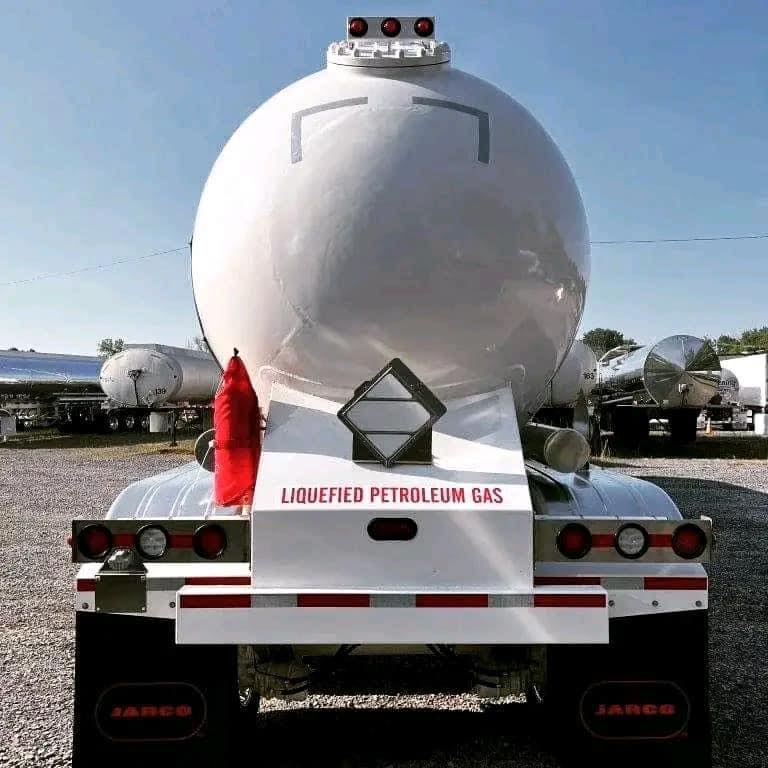
Periodic tests are marked on the tank too. Each completed test carries a month and year and a code, for example V for external visual inspection, K for leakage test, P for pressure test, I for internal visual inspection, T for thickness test and L for lining inspection.
Periodic testing
49 CFR 180.407 sets the test and inspection schedule for specification cargo tanks. In the general case its table sets a leakage test at least every year and a pressure test at least every five years, with exceptions for particular services. It also says that a tank whose test or inspection has become due may not be filled and offered for transportation, or transported, until the test or inspection has been completed. Read the current regulation text rather than relying on a summary, because the schedule has exceptions.
Transport trailer or storage tank?
A transport trailer moves product on public roads. A stationary tank stores it. Skid tanks, such as our 30,000-gallon skid tank, are storage vessels that can be set in place as a unit, not road-going trailers. If you need a fixed tank, read our guide to propane tank sizes and capacities.
What to check before you buy
The tank
Look at the shell for dents, corrosion and repairs, at the fittings for damage, and at the plates for legibility. Ask for the records that show when and what tests were done.
Piping, valves and pump
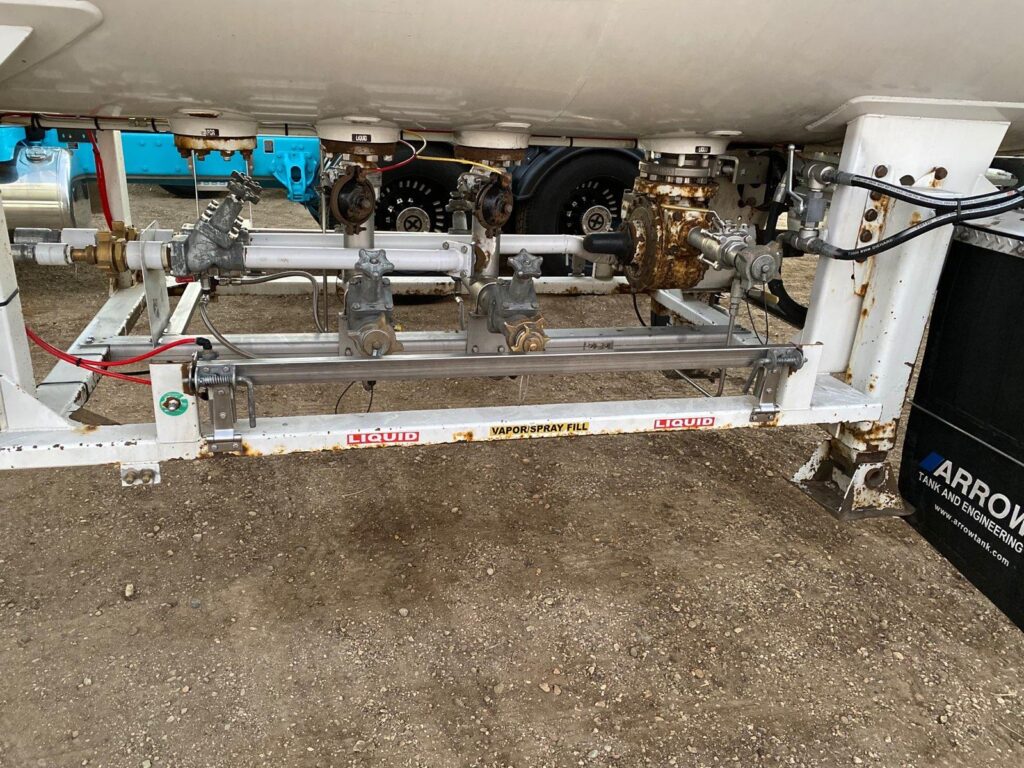
Loading and unloading equipment, including product piping, valves and the pump, should be complete and in working order. Ask how it was last tested and what has been replaced.
Undercarriage
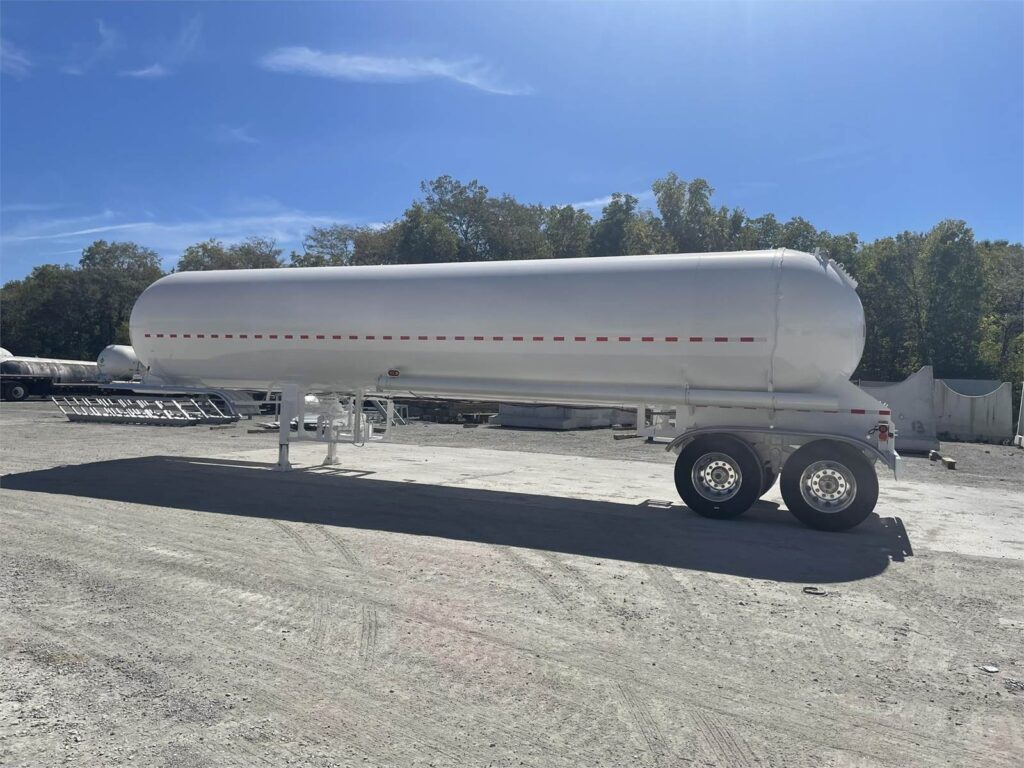
Inspect axles, brakes, tires, suspension, landing gear and the fifth-wheel connection as you would any heavy trailer. Worn running gear can cost as much as a repair to the tank.
Paperwork and operating rules
Ask for the ownership paperwork and the tank documents. Running a hazardous-materials trailer on public roads also brings driver, carrier and registration requirements that vary by location, so check with the relevant authorities before you buy. See our post on tank documentation to ask for for the documents that matter.
Trailers to look at
These listings show the type discussed here. Confirm the specification, condition and paperwork with our team before ordering:
- 11,600-gallon MC-331 LPG tank trailer, listed as an industrial gas tank trailer.
- 11,600-gallon MC-331 LPG tanker as a second option.
Browse the LPG transport trailer category for the current range, or see the propane tanks category for stationary tanks.
LPG tank trailer FAQs
What does MC-331 mean?
It is the U.S. DOT specification for pressure cargo tanks that carry liquefied compressed gases. The tank must be built and stamped to ASME Section VIII and meet the requirements in 49 CFR 178.337.
Can an LPG trailer carry anhydrous ammonia?
Do not assume so. Anhydrous ammonia tanks have extra requirements, including post-weld heat treatment, so confirm that a specific tank is authorized for the product you want to haul. Our post on NH3 tank sizes covers ammonia tanks.
How do I know when a tank was last tested?
Look for the test markings on the tank and ask for the test records. The markings show the month, the year and the type of test.
Is a skid tank the same as an LPG trailer?
No. A skid tank is stationary storage. A trailer is a transport vehicle regulated as a cargo tank motor vehicle.
This post is general information, not legal, safety or compliance advice. Requirements depend on your location and equipment, so confirm them with the relevant authority or a qualified professional.
Where to go next
See our Buyer’s Guide for the basics of buying online, browse the full inventory, or contact the team with your requirements.
More in the Blog: