
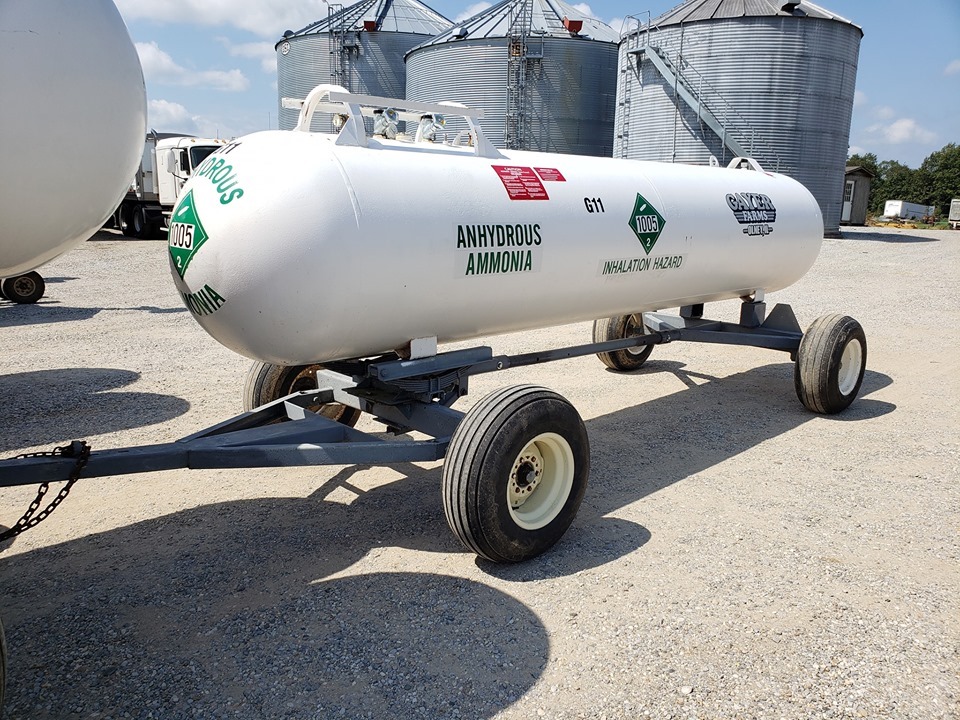
Anhydrous ammonia (NH3) is stored and moved in pressure vessels, and the range of sizes and formats is wider than the headline capacities suggest. A 1,000-gallon tank on a farm wagon, a 2,000-gallon stationary tank and a 10,000-gallon transport trailer are built for very different jobs. This guide to NH3 tank sizes explains the common capacities, the formats they come in, and what to check before you buy. Anhydrous ammonia is hazardous, so handling and use should only ever be done by trained people following the applicable rules.
Key takeaways
- The size is only part of the specification. Format, pressure rating and certification matter just as much.
- Nurse tanks, stationary tanks and transport trailers are different equipment with different rules.
- Ask for the nameplate details and records for the exact tank.
- Ammonia service has extra requirements, so do not assume a propane tank is suitable.
NH3 tank sizes at a glance
| Capacity | Format | Notes from our listings |
|---|---|---|
| 1,000 gallons | Horizontal tank | Listed as an NH3 tank; fittings and valves shown on top of the tank |
| 1,450 and 1,465 gallons | Horizontal tank, including wagon-mounted versions | The 1,465-gallon listing states ASME Section VIII, Division 1, compliance with CGA G-2.1 and National Board registration |
| 2,000 gallons | Horizontal tank | Listed as a 2,000-gallon NH3 tank, shown on tracked running gear in some photos |
| Twin 1,000 gallons | Two tanks on one running gear | Described as nurse tanks; one listing cites 250 psi at 125 degrees Fahrenheit |
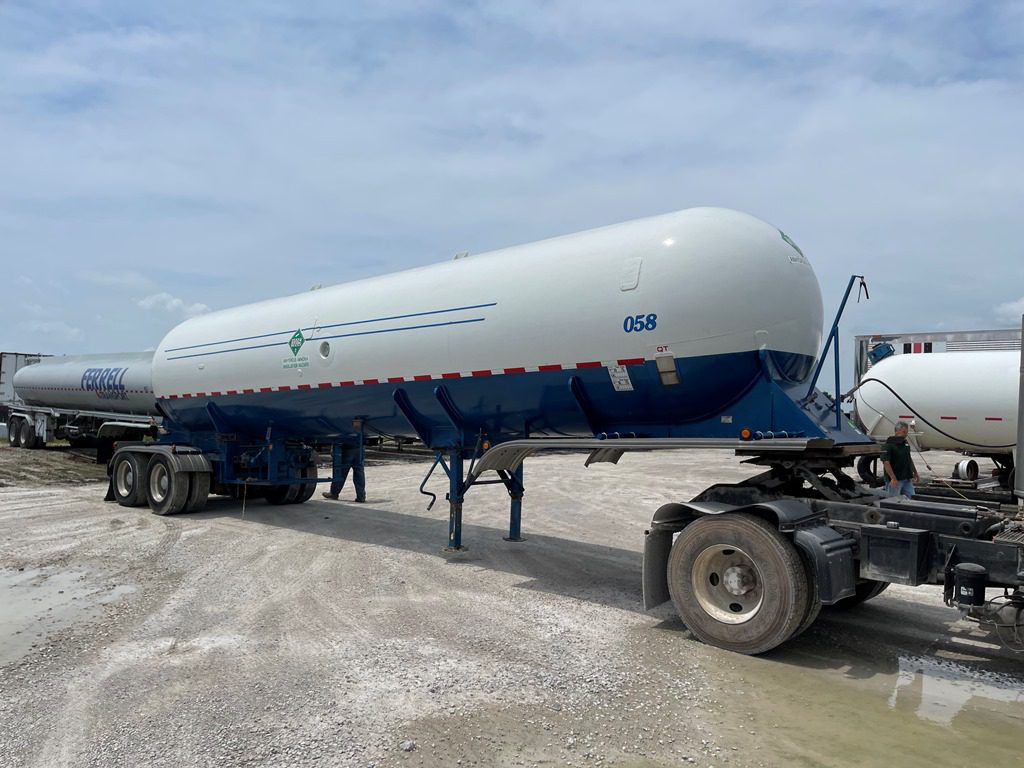
| About 10,400 to 10,450 gallons | Transport trailer | Listed as used units with listing years from 1964 to 1974; listings quote National Board numbers |
Sizes and specifications come from our listings for individual units and can differ between units, so confirm them on the tank you are considering. Several listings for used equipment also mention older builds, which makes test records and inspection status especially important.
Nurse tanks, stationary tanks and transport trailers
Nurse tanks
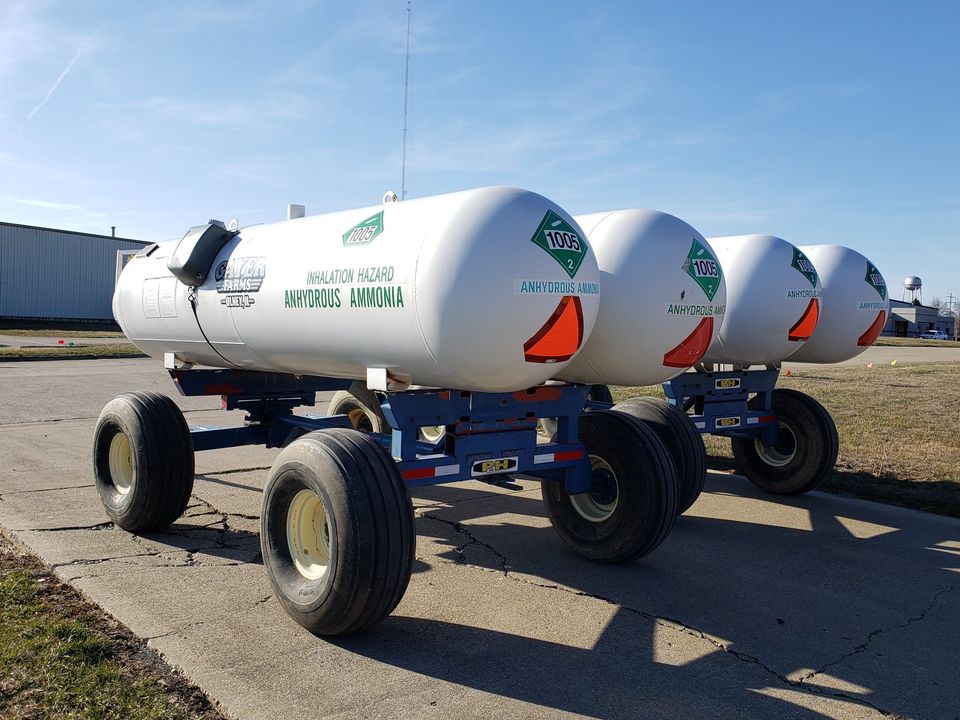
Portable tanks on running gear, often called nurse tanks, are used on farms to carry ammonia to where it will be applied. OSHA’s ammonia standard uses the term farm vehicle for a vehicle used on a farm with a mounted container of up to 1,200 gallons water capacity, and it treats farm vehicles separately from bulk transport vehicles. Our twin 1,000-gallon listing describes tanks used to haul NH3 to farmers for seasonal application. Nurse tanks are compact and towable, but the equipment, the valves and the running gear all need to be in good order.
Stationary tanks
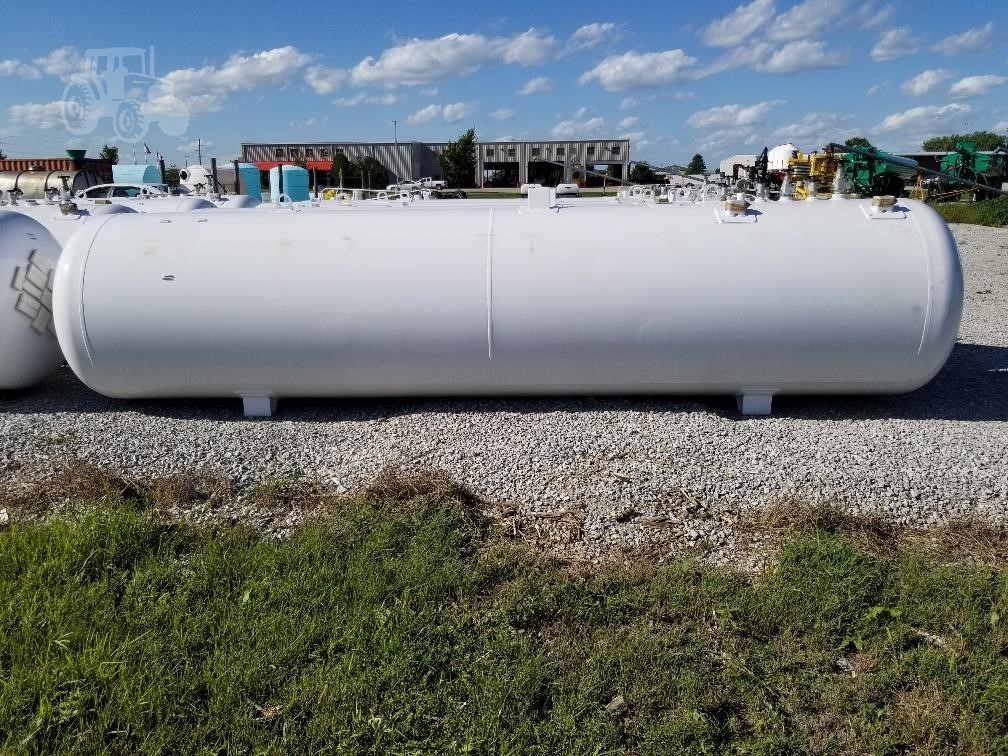
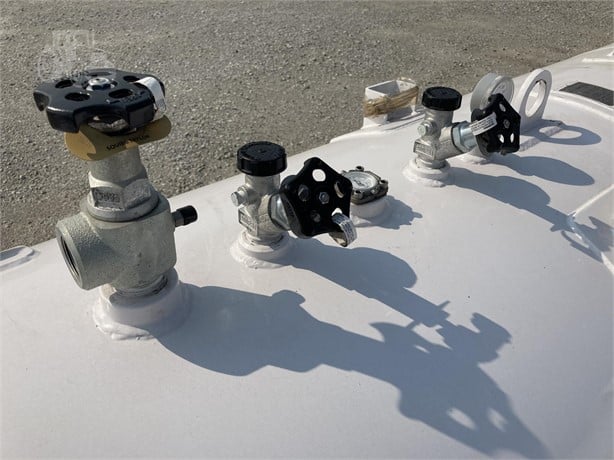
A stationary tank stays in place as bulk storage. Look at the fittings, valves and lifting points, and check the nameplate before you rely on any figure. Our 1,465-gallon, 1,000-gallon and 2,000-gallon listings show this class.
Transport trailers
A transport trailer moves ammonia on public roads and is a regulated cargo tank motor vehicle. Under 49 CFR 178.337-1, an MC-331 tank must be built to ASME Section VIII and a cargo tank used for anhydrous ammonia must be post-weld heat treated. That is one reason not to assume that a tank suited to another product is suitable for ammonia. Our guide to LPG tank trailers explains MC-331 plates and test markings, and the same ideas apply here. See the 10,450-gallon NH3 transport listing for an example.
Standards to know
The Compressed Gas Association standard CGA G-2.1 covers the design, construction, repair, alteration, location, installation, maintenance and operation of anhydrous ammonia systems. It is an American National Standard, and the current version was approved in 2024. In the United States, OSHA’s anhydrous ammonia standard, 29 CFR 1910.111 also covers the design, construction, location, installation and operation of anhydrous ammonia systems, and it requires containers and systems to be marked with details such as the words “Anhydrous Ammonia,” the water capacity and the design pressure. Your local regulations may add requirements. Ask the seller which standards a specific tank was built and registered to, and for the paperwork that shows it. Our post on tank documentation lists what to ask for.
How to choose an NH3 tank
- Decide the job first: field application, on-site bulk storage or road transport.
- Match the capacity to your usage and refill routine, allowing for how the tank will be moved and filled.
- Check the nameplate: pressure rating, capacity, manufacturer, serial number and year.
- Ask for records: test dates, repairs and National Board registration where applicable.
- Check the site and rules: location, distances and permits are governed by the standards and your local authority.
- Check condition: shell, fittings, relief valves, running gear and paint.
NH3 tanks to look at
These listings show the main formats. Confirm the specification, condition and paperwork with our team before ordering:
- 1,000-gallon NH3 tank for smaller storage needs.
- 1,465-gallon NH3 tank, whose listing cites ASME and National Board registration.
- 2,000-gallon NH3 tank for larger storage.
- Twin 1,000-gallon nurse tanks on running gear.
- 10,450-gallon NH3 transport trailer for road transport.
Browse the full NH3 tank range, or compare with our propane tank range.
NH3 tank size FAQs
What size NH3 tank do I need?
It depends on how much ammonia you use and how you handle it. Nurse tanks suit field application, stationary tanks suit bulk storage, and trailers suit road transport. Ask a qualified supplier or your local authority to help you specify.
Is a propane tank the same as an NH3 tank?
No. They look similar, but ammonia service has its own requirements, and a tank must be suitable and certified for the product it holds.
What does National Board registration mean?
A National Board registration number on the nameplate means the vessel was registered with the National Board at manufacture, and its data report can be ordered using that number and the manufacturer name. See our post on tank documentation.
This post is general information, not legal, safety or compliance advice. Requirements depend on your location and equipment, so confirm them with the relevant authority or a qualified professional.
Where to go next
Read our Buyer’s Guide for the basics of buying online, browse the full inventory, or contact the team with your requirements.
More in the Blog: