
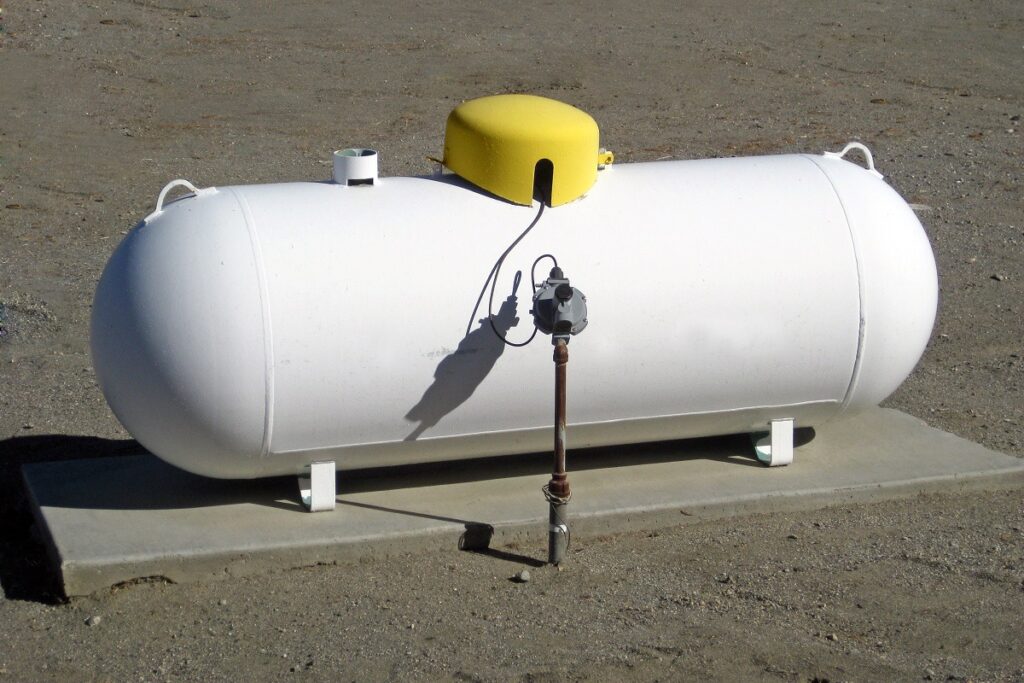
Propane tanks are sold by capacity, but the number on the listing does not tell you the whole story. A 1,000-gallon tank does not hold 1,000 gallons of propane, a bigger tank is not always the better choice, and the right size depends on what you run on it. This guide to propane tank sizes explains how capacity is measured, what the common sizes are typically used for, and what to check before you buy.
Key takeaways
- Tanks are rated by water capacity, and they are never filled completely. As a rule of thumb, usable propane is roughly 80% of the stated size.
- Match the size to your appliances and your refill routine, not to the largest tank you can fit.
- Read the nameplate. It records the working pressure, capacity and build details for that specific tank.
- Handling, installation and first fill are jobs for qualified people, and local rules vary.
Water capacity vs usable capacity
Propane tank size is stated as water capacity: the volume of water the tank would hold. Liquid propane expands as it warms, so a tank has to keep some vapor space and is not filled to the top. The maximum filling limit is set by code (the standard that covers this is NFPA 58), and guidance from the Propane Education & Research Council says propane containers are typically filled to 80 percent of their capacity (PERC safety guide). That is why one of our 1,000-gallon above-ground listings notes that the tank holds approximately 800 gallons of propane.
When you compare tanks, compare water capacity, then work out the usable volume yourself so you can judge how long a fill will last.
Propane tank sizes at a glance
Sizes and typical uses overlap, and your appliances matter more than the label. The table shows how the sizes we list are commonly described. Confirm the exact specification of the unit you are buying. These are general descriptions, not sizing advice, and a propane professional should size your system.
| Size (water capacity) | Commonly used for | Notes from our listings |
|---|---|---|
| 120 gallons | Small loads such as a cabin, workshop or a few appliances | Listed in vertical and horizontal versions |
| 250 gallons | Small homes, part-time use or backup supply | One listing gives outer dimensions of 30 in by 93 in and roughly 670 lb empty; rated 250 psig |
| 500 gallons | Whole-home heating, hot water, a generator or pool heating | Horizontal; above-ground or underground versions |
| 1,000 gallons | Larger homes, farms and light commercial use | One above-ground listing: about 15 ft 11 in long, roughly 1,729 lb, 250 psig MAWP, ASME Section VIII, Division 1 |
| 1,150 gallons | Dispensing and service-station tanks | Listing describes a 250 psig working pressure |
| 2,000 gallons | Larger residential, agricultural and commercial supply | Above-ground or underground versions |
| 10,000 gallons and up | Bulk storage | Skid-mounted storage tanks of 18,000 and 30,000 gallons are also listed |
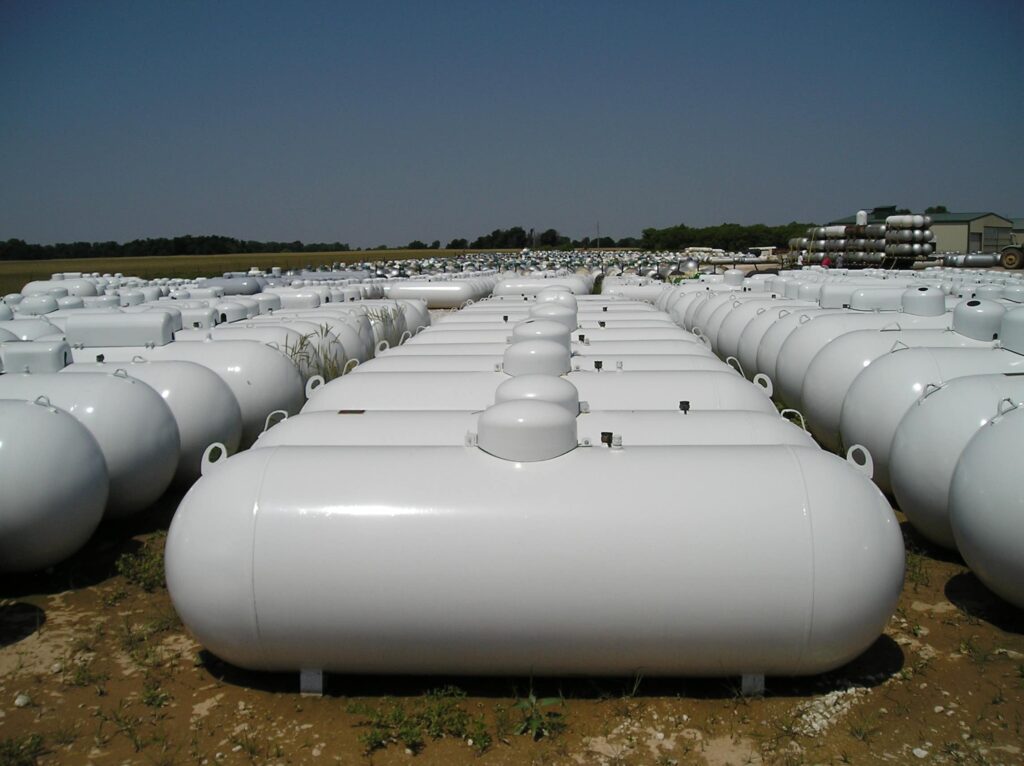
How to choose a propane tank size
- List what will run on propane. Heating, water heating, cooking, drying, a generator and pool heating all draw differently. Your propane supplier or a licensed installer can calculate the load.
- Think about your refill routine. A larger tank means fewer deliveries and more buffer through a cold spell, but it costs more and needs more space.
- Check the site. Location rules cover distances to buildings, property lines and ignition sources, and they come from NFPA 58 and your local authority.
- Plan for the future. If you may add appliances later, ask about the next size up now.
Above ground or underground?
Many sizes come in both versions. An above-ground tank is easier to see and inspect. An underground tank takes up less visible space and, being surrounded by earth, is less affected by weather swings, but it is buried, so corrosion protection and access for inspection are points to discuss with your installer. Cost, soil conditions, the local water table and local rules all affect the choice, so ask your installer before you commit. Our 1,000-gallon listings are available in both versions.
Read the nameplate: ASME and pressure rating
Stationary propane tanks are typically built to the ASME Boiler and Pressure Vessel Code, Section VIII, Division 1. You can read how the ASME Section VIII, Division 1 code covers pressure vessel construction. The nameplate on a tank typically records identifying details such as the manufacturer, serial number and maximum allowable working pressure (MAWP), and the exact markings vary by tank. Several of our listings show a 250 psig rating, as do manufacturer specification sheets such as Hanson Tank’s 1,000-gallon ASME propane tank, but check the plate on the tank you receive rather than relying on a listing alone. For a full list of documents to ask for, see our post on tank documentation.
Handling, delivery and installation
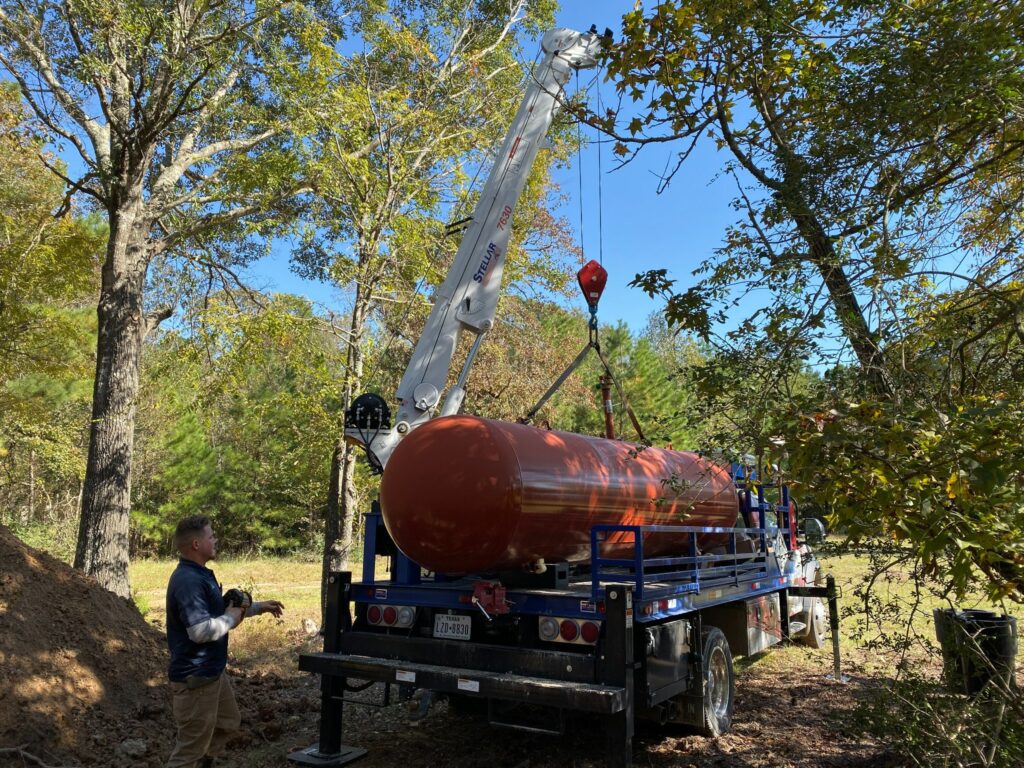
Tanks are heavy and awkward. The 1,000-gallon listing above shows about 1,700 lb, so moving one needs suitable equipment and planning for the delivery route and the final position. Connection, testing and the first fill of a stationary tank are normally done by a licensed propane professional, and requirements differ by state and locality. Never try to move a tank that contains propane.
Large and bulk storage
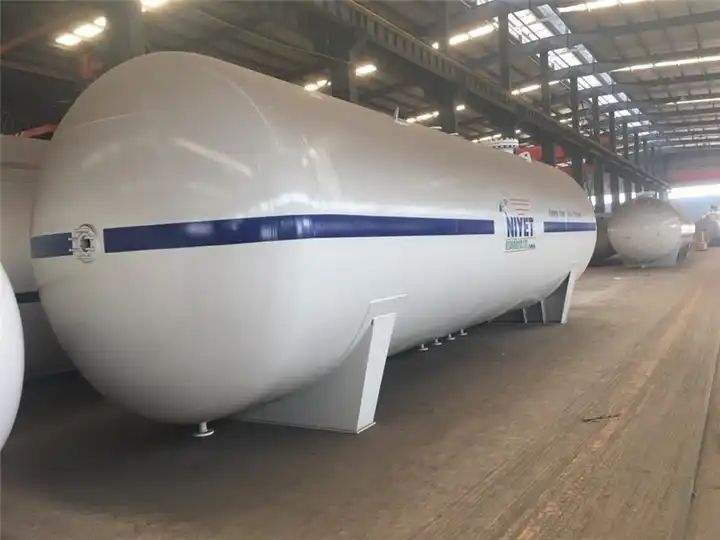
At the top of the range, tanks become storage vessels for distributors, industrial users and farms. They are engineered, transported and installed as projects, so check pressure rating, certification and site requirements early. Our 10,000-gallon ASME storage tank and the 30,000-gallon skid tank are examples of this class. Skid-mounted storage can be relocated more easily than a fixed tank, but it is still stationary storage, not a transport trailer. If you are looking for a road-going vessel, read our guide to LPG tank trailers.
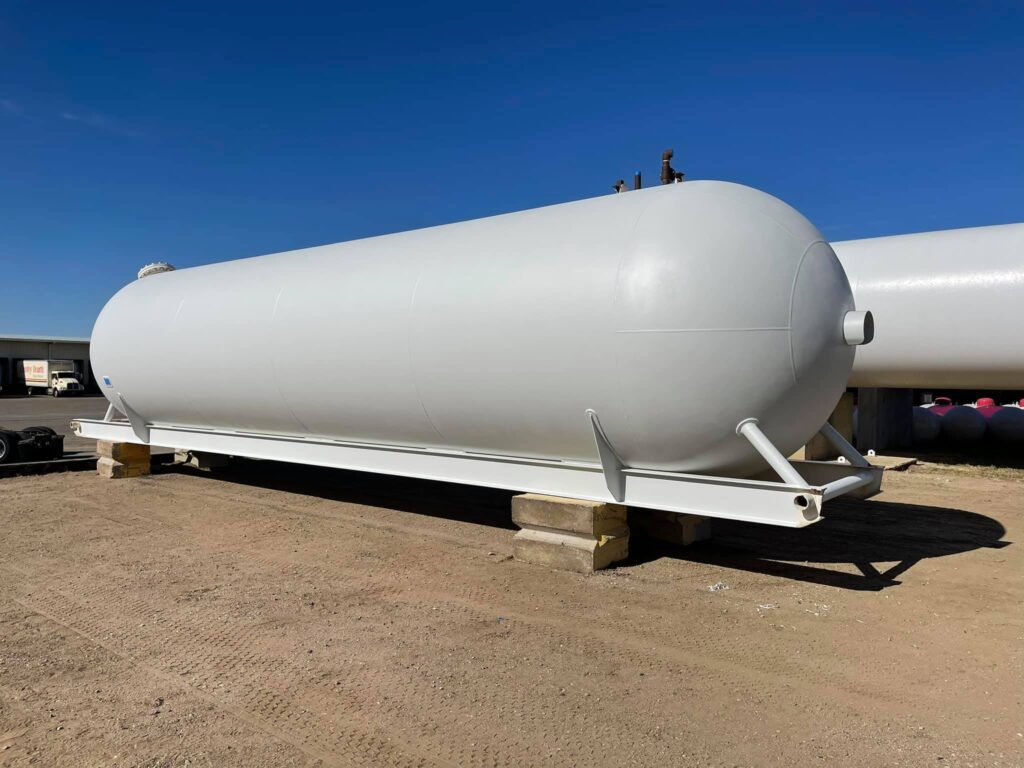
Propane tanks to look at
These listings show how the sizes above appear in our inventory. Confirm capacity, condition, certification and delivery with our team before ordering:
- 250-gallon ASME and DOT propane tank for smaller supply needs.
- 500-gallon propane tank in above-ground and underground versions.
- 1,000-gallon above-ground tank with the specification details described above.
- 10,000-gallon ASME storage tank for bulk storage.
You can also browse the full propane tank range or the LPG transport trailers and skid tanks category.
Propane tank size FAQs
What size propane tank do I need?
It depends on your appliances, your climate and how often you want refills. List everything you will run on propane and ask your propane supplier or installer to size the load. Common residential choices are 250, 500 and 1,000 gallons.
Why does a 1,000-gallon tank hold only about 800 gallons?
Tanks are rated by water capacity and are not filled completely, because liquid propane expands with temperature. Filling limits are set by code, and roughly 80% is a common rule of thumb.
Are above-ground or underground tanks better?
Neither is better in every case. Above-ground tanks are easier to inspect. Underground tanks take less visible space but typically need corrosion protection. Site conditions and local rules usually decide.
What does ASME mean on a propane tank?
It means the tank was built to the ASME pressure vessel code. The nameplate records the details for that tank, including its working pressure.
Can I install a propane tank myself?
In many places, installation, connection and the first fill must be done by qualified, licensed people, and rules vary. Ask your local authority and a licensed propane professional.
This post is general information, not legal, safety or compliance advice. Requirements depend on your location and equipment, so confirm them with the relevant authority or a qualified professional.
Where to go next
Read our Buyer’s Guide for the basics of buying online, see the FAQs, or contact the team with your tank requirements.
More in the Blog: