
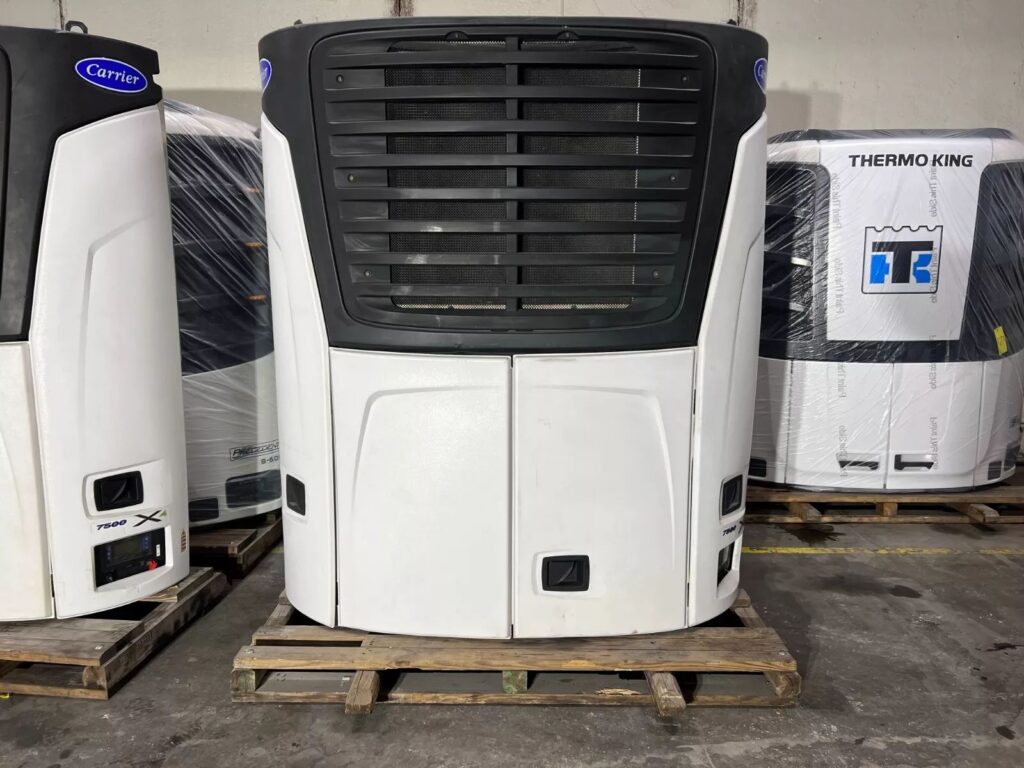
Transport refrigeration units keep food, pharmaceuticals and other temperature-sensitive cargo cold on the road. The name covers a lot of different machines: small units on delivery trucks, large units on trailers, single-temperature and multi-temperature models, and units that run on diesel, on electric standby, or both. This guide explains how truck units and trailer units differ, and the questions worth asking before you buy one.
Key takeaways
- Truck units and trailer units are built for different jobs. Match the unit to the body it will be mounted on.
- Single-temperature and multi-temperature units are not interchangeable. Multi-temp units split the load into separate zones.
- Check how the unit is powered: diesel engine, electric standby, or a diesel-electric design.
- Capacity figures only make sense with their test conditions, so compare like with like.
What are transport refrigeration units?
The California Air Resources Board describes transport refrigeration units (TRUs) as refrigeration systems powered by diesel internal combustion engines, designed to refrigerate or heat perishable products transported in truck vans, semi-truck trailers, shipping containers and railcars. In practice the term is used more widely for the refrigeration machine mounted on a truck body or a trailer, whether or not it has its own engine.
Truck units vs trailer units
| Truck units | Trailer units | |
|---|---|---|
| Mounted on | A straight truck or van body | A semi-trailer |
| Sized for | Smaller cargo boxes; one of our Carrier Supra listings describes trucks from 12 to 28 feet long | Long refrigerated trailers |
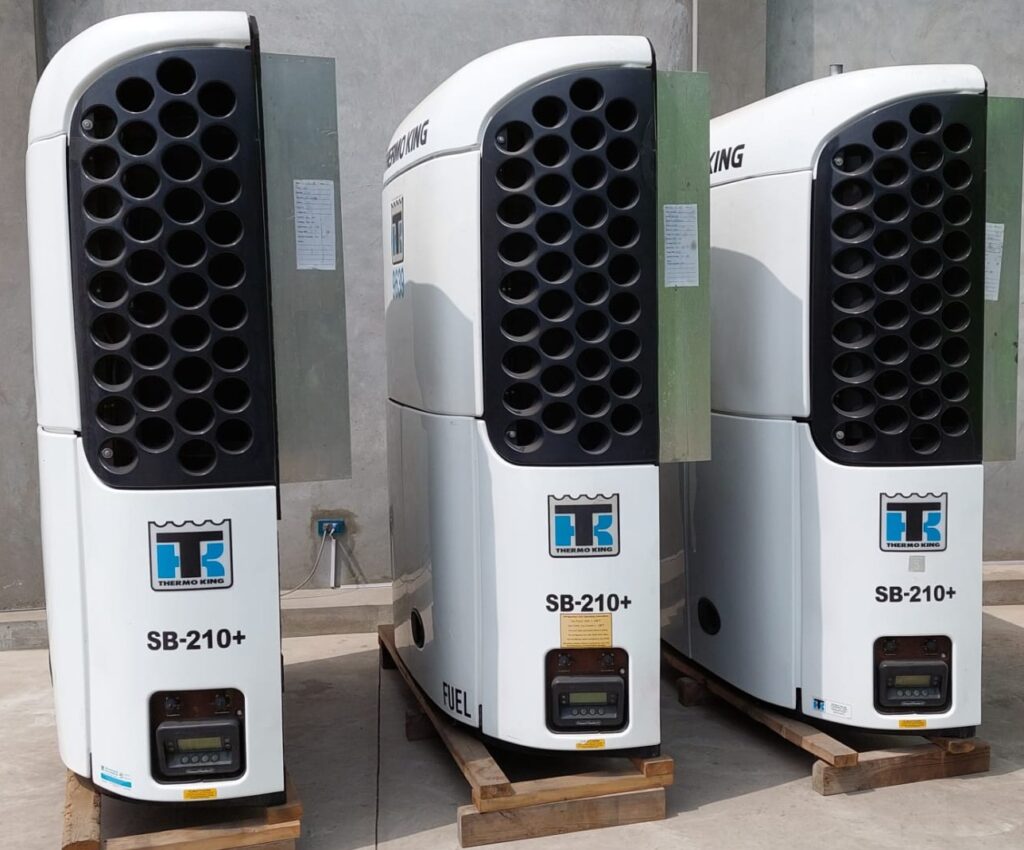
| Examples in our range | Thermo King T-Series, Carrier Supra | Thermo King SB, SL and Precedent series; Carrier X4 and Vector series |
| Where to browse | Truck refrigeration units | Carrier trailer units and Thermo King units |
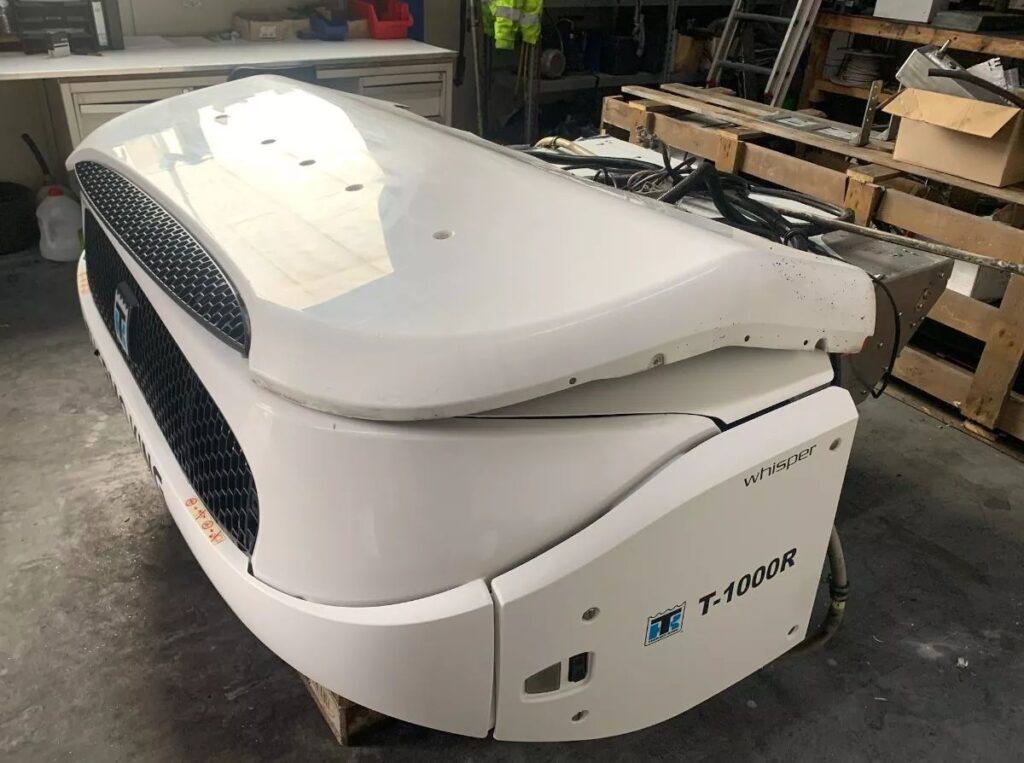
Do not try to fit a truck unit to a trailer or the reverse. Mounting, size, airflow and cooling capacity all differ, so confirm compatibility with the seller before you order.
Single-temperature and multi-temperature units
A single-temperature unit holds one set point for the whole cargo space. A multi-temperature unit splits the space into zones so, for example, chilled and frozen goods can travel together. Our listings for the Thermo King T-1000R Spectrum describe a self-powered truck unit with multi-temperature capability, and the Carrier Vector 8611MT listing describes a trailer unit with two evaporators for two-zone cooling. Both of these are manufacturer descriptions, so check the configuration you actually receive. Our multi-temp trailer refrigeration units category groups the trailer models.
How they are powered
- Diesel-powered (self-powered): the unit has its own engine and runs independently of the vehicle.
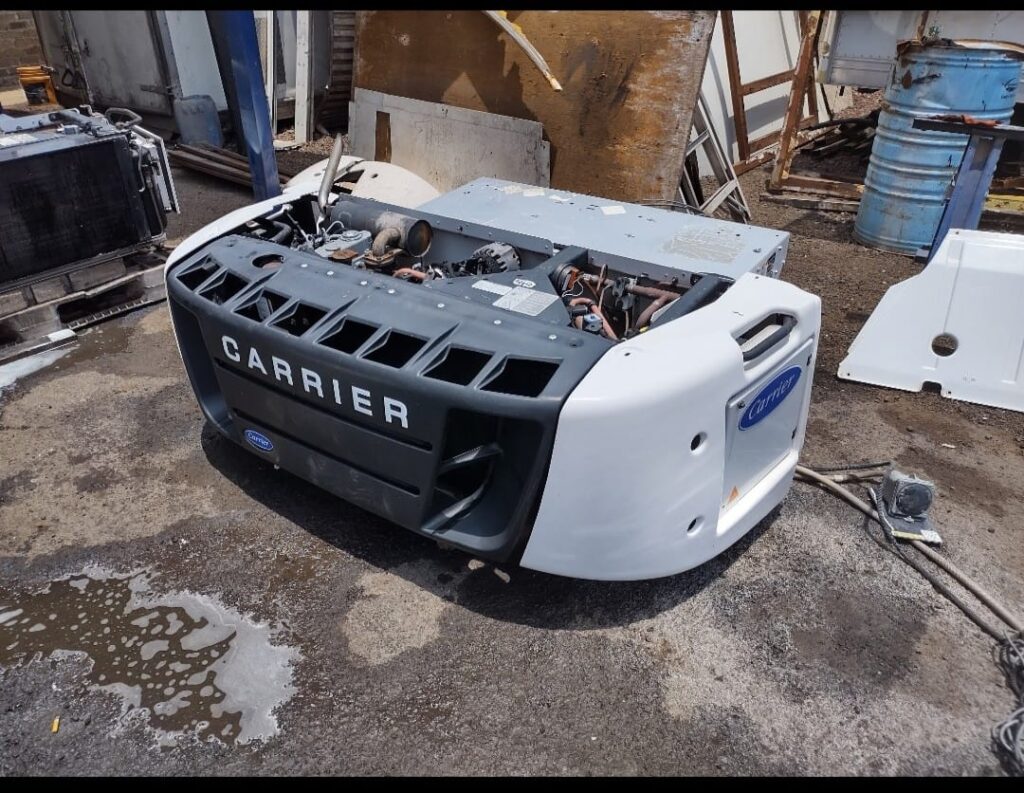
- Electric standby: a unit with this option can also run from a plug-in electrical supply when parked, so the engine can stay off. Our Carrier Supra 560 listing mentions an electric standby option, and another truck listing cites a 230 volt, three-phase standby supply. The requirement varies by unit, so confirm it.
- Diesel-electric designs: the Vector listing describes a diesel engine that drives an electric generator which then powers the refrigeration system.
Reading capacity figures
Cooling capacity is only meaningful with its conditions. The listing for the Carrier Supra 560 quotes up to 14,500 BTU under AHRI rating conditions (Carrier’s own Supra 560 page gives the same figure), and the Carrier X4 7500 listing quotes 68,000 BTU at a 35 degrees Fahrenheit set point and 100 degrees Fahrenheit ambient temperature. These figures come from manufacturer information in the listings and describe different unit types, so they are not a like-for-like comparison. When you compare units, ask for capacity at the same set point and ambient temperature.
Emissions and rules
Diesel engines in transport refrigeration units are regulated in some regions. CARB notes that these engines are small, but that large numbers of them gather at distribution centers and truck stops. Some of our listings describe units as Stage V compliant or CARB Evergreen certified. Treat those as claims to check against the unit you receive and the rules where you will operate it.
What to check before you buy
- Compatibility: truck or trailer, unit size and mounting.
- Engine hours and service history: several used-unit listings quote engine hours, which is the kind of detail to request for any unit.
- Controller alarms and function: ask for a photo or video of the unit running and its alarm history.
- Power arrangement: diesel only, or with electric standby, and at what voltage and phase.
- Refrigerant and condition: ask what refrigerant the unit uses and whether it was recently serviced.
- Emissions status: confirm the compliance status for your operating area.
Refrigeration units to look at
These listings show the unit types discussed above. Confirm the model, condition and compatibility with our team before ordering:
- Thermo King T-1000R Spectrum as a self-powered truck unit.
- Carrier Supra 560 with electric standby option for smaller truck bodies.
- Thermo King SB-210 trailer unit as a trailer example.
- Carrier X4 7500 and Vector 8611MT as Carrier trailer options.
Transport refrigeration unit FAQs
What is the difference between a truck unit and a trailer unit?
A truck unit is sized for a straight truck or van body. A trailer unit is a larger machine for a semi-trailer. They are not interchangeable, so match the unit to the body.
What does multi-temperature mean?
A multi-temperature unit can hold different temperatures in separate zones of the same cargo space, for example chilled and frozen.
Do I need electric standby?
Only if you want to run the unit from a plug-in supply when parked. Check that the unit has the option and that your site supply matches its voltage and phase.
How is this different from a refrigerated container?
A refrigerated container has its refrigeration machinery built in. A transport refrigeration unit is a machine mounted on a truck or trailer. See our guide to refrigerated containers for the container side, and our guide to clip-on and undermount gensets for how containers are powered on the move.
This post is general information, not legal, safety or compliance advice. Requirements depend on your location and equipment, so confirm them with the relevant authority or a qualified professional.
Where to go next
Read our Buyer’s Guide for the basics of buying online, browse the full inventory, or contact the team with your requirements. More guides are in the Blog.